19 Choppy Pixie Cut Ideas for a Chic, Edgy Look
A choppy pixie cut brings texture, movement, and personality to short hair without requiring a complicated routine. The right shape can make fine hair appear fuller, give thick hair more structure, or add definition to naturally curly texture.
In this guide, you will find 19 wearable ideas ranging from soft and feminine to bold and edgy, along with practical styling tips for different hair types, face shapes, and lifestyles. Whether you prefer piecey layers, side-swept bangs, tapered sides, or a messy finish, there is plenty of inspiration to take to your next salon appointment.
1. Classic Choppy Pixie
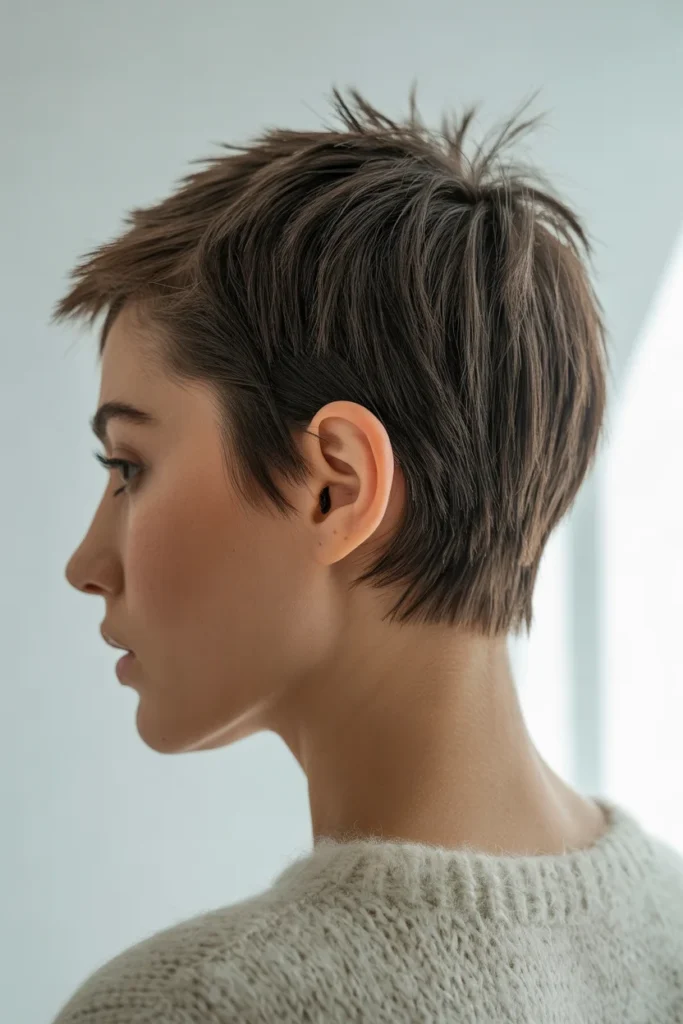
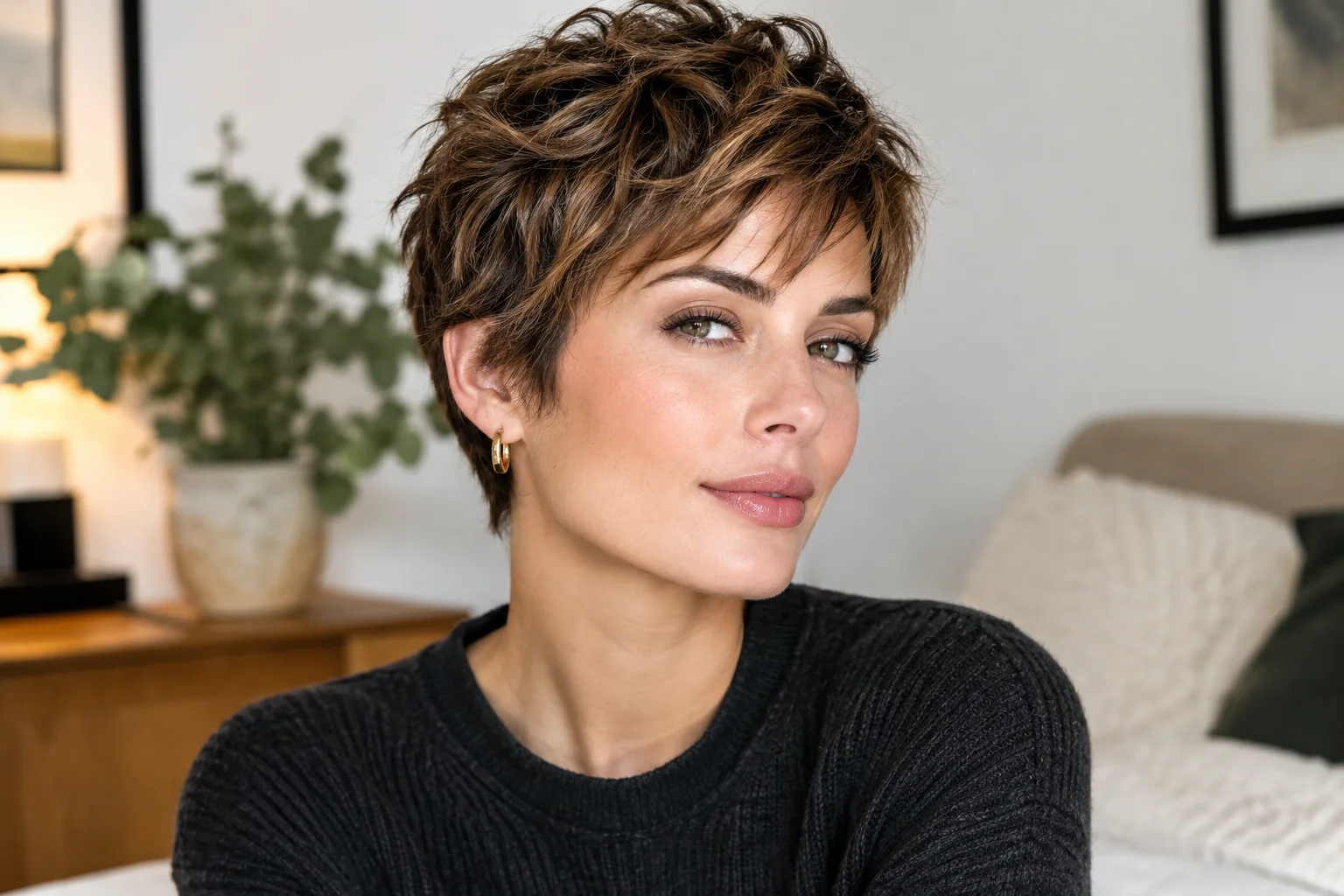
A classic choppy pixie keeps the sides and back relatively short while leaving enough length through the crown for visible texture. Uneven layers create a piecey finish rather than a perfectly smooth silhouette, giving the haircut a modern edge. The top can be directed slightly forward or lifted for extra movement.
This shape is especially practical for women who want short hair without a completely uniform finish. Straight and slightly wavy textures make the layers easy to define, while an oval or heart-shaped face can work naturally with the compact shape. A small amount of matte styling paste helps separate individual pieces.
2. Textured Layered Pixie

- Length: Short around the sides with longer layers through the crown.
- Texture: Works particularly well with straight or lightly wavy hair.
- Volume: Choppy layers create lift without requiring a large amount of product.
- Styling: Use a lightweight texturizing cream and separate the ends with your fingers.
- Maintenance: Regular trims keep the layered shape from becoming bulky.
The layered construction gives this cut plenty of visual movement. Ask your stylist to keep some variation between the crown and sides rather than cutting everything to the same length. That difference helps the top stand up naturally and makes everyday styling faster.
3. Side-Swept Bangs
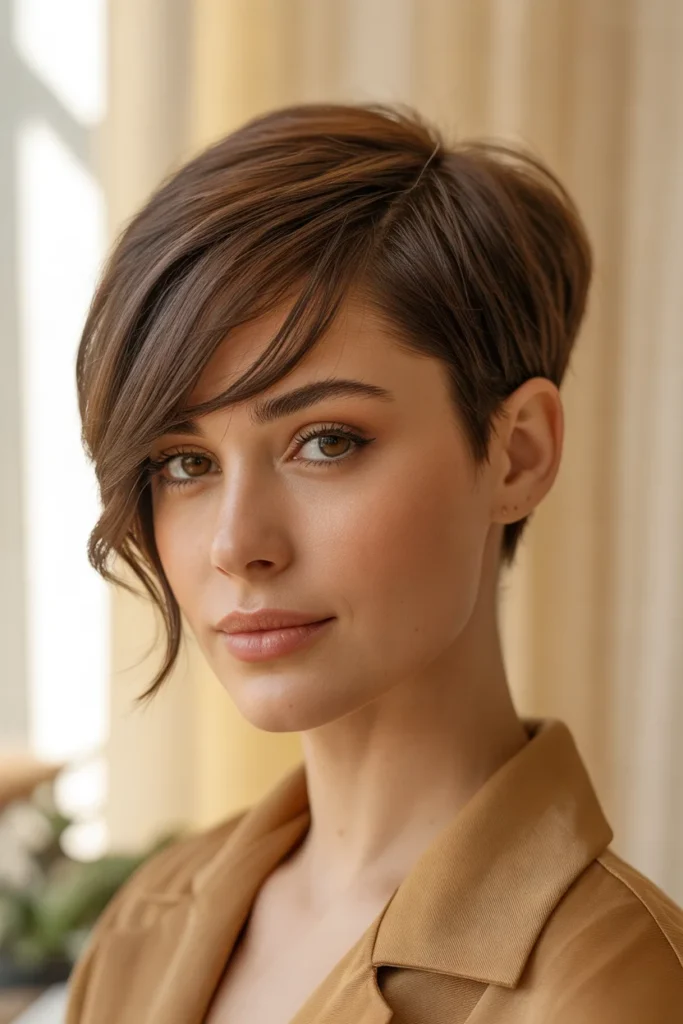
Quick Tip: Blow-dry the bangs diagonally across the forehead while they are still slightly damp. Use your fingers or a small brush to direct the roots, then finish with a light styling cream rather than a heavy wax.
Side-swept fringe softens the short silhouette and gives you more control over how much forehead is visible. The longer front section can be tucked behind the ear, swept across the brow, or separated into piecey sections. It is a useful choice for women who want a short haircut with a little more face framing.
4. Messy Piecey Finish

BEFORE
The hair may look flat at the roots, with the layers blending together and the ends sitting too neatly. Short cuts can sometimes lose their shape when they are allowed to air-dry without any product.
AFTER
The finished style has separated pieces, lifted roots, and irregular texture throughout the crown. The ends point in slightly different directions, creating a deliberately undone appearance without making the haircut look unkempt.
Work a pea-sized amount of lightweight matte paste through dry hair, concentrating on the mid-lengths and ends. Avoid coating the roots heavily because too much product can make a short style look greasy and flatten the lift you are trying to create.
5. Longer Crown Pixie

- Prepare: Start with clean, towel-dried hair and apply a lightweight volumizing product to the roots.
- Lift: Blow-dry the crown upward with your fingers, directing the hair slightly away from the scalp.
- Shape: Once dry, pinch small sections between your fingertips to emphasize the longer layers.
- Finish: Add a small amount of flexible paste to the ends for separation.
The extra length through the crown makes this version easier to adapt from day to day. You can wear the top forward for a softer appearance, sweep it sideways for more face framing, or lift it for a sharper silhouette. It is also useful during the growing-out stage.
6. Wispy Fringe
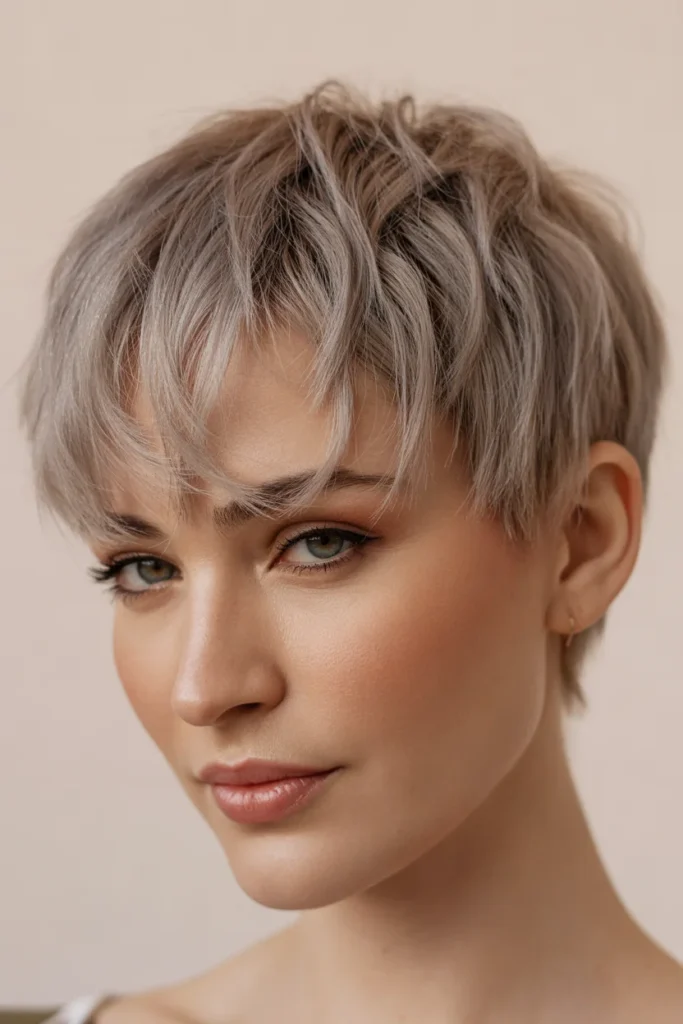
| Feature | Soft Wispy Finish | Defined Fringe |
| Bang texture | Light and separated | More structured |
| Visual effect | Softens the forehead | Creates stronger definition |
| Styling time | Quick | Moderate |
| Best mood | Casual and feminine | Polished and edgy |
A wispy fringe gives short hair a lighter appearance, especially when the bangs are cut with subtle separation instead of a dense, blunt edge. The softer option can suit finer hair because it does not visually overwhelm the face. A defined fringe creates more contrast and works well when you want the haircut to feel sharper.
7. Layered Crown Texture

DO:
- Keep the longest layers concentrated around the crown for controllable volume.
- Use a lightweight cream when the hair tends to become dry or fluffy.
- Twist small sections while drying to emphasize natural movement.
- Ask for carefully blended layers around the temples.
DON’T:
- Overload short layers with heavy oils or waxes.
- Remove too much weight from already fragile fine hair.
- Use high heat directly on the ends every day.
- Cut every layer to the same length.
The main styling principle here is controlled separation. The haircut should have enough variation to create movement, but the layers still need a clear overall shape. A soft matte product is usually enough to highlight the crown without making the cut feel stiff.
8. Undercut Detail

Hair Length: Short sides and back with a longer textured top.
Hair Type: Straight, wavy, or dense hair can carry the contrast well.
Maintenance: The undercut requires more frequent trimming to keep the difference in length visible.
Best For: Women who enjoy a bold haircut with multiple styling directions.
The undercut removes visual weight from the lower sections while leaving the crown free to create texture. It can be subtle around the nape or more noticeable around the sides. For thick hair, this approach can also make the haircut feel lighter and easier to manage.
9. Tousled Crown

The tousled version has a deliberately irregular finish, with short layers pointing in different directions around the crown. Rather than creating a perfectly controlled shape, the styling emphasizes natural movement and separated ends. A slightly lifted front gives the haircut more attitude without making it look overly dramatic.
This variation is particularly useful for straight hair that tends to sit close to the scalp. A root-lifting spray followed by finger styling can create enough height for the layers to show. For naturally wavy hair, scrunching a small amount of lightweight cream into damp sections can produce a softer tousled effect.
10. Long Side Bangs

- Front length: Keep the fringe noticeably longer than the surrounding crown layers.
- Parting: A side part creates a natural direction for the longer pieces.
- Face framing: Let the fringe skim the cheekbone area for a softer outline.
- Texture: Keep the ends slightly piecey instead of perfectly blunt.
- Styling: A small round brush can help curve the front away from the face.
Longer side bangs create an easy transition between a very short haircut and a more face-framing style. They are also useful if you are nervous about committing to very short bangs. The front can be changed from day to day, giving the haircut more versatility than its short length suggests.
11. Blonde Texture

Quick Tip: Blonde hair can show texture clearly, so avoid applying too much product to the ends. Work a lightweight cream or paste between your palms first, then gently pinch only the pieces you want to emphasize.
A blonde finish highlights the contrast between short layers and longer crown pieces, making the haircut look especially dimensional. Warm blonde shades create a softer appearance, while cooler blonde tones can emphasize the edgy character of the cut. Regular conditioning is important because frequent lightening can leave short ends feeling dry.
12. Thick Hair Shape

BEFORE
Dense hair can make a short cut look wider than intended when the internal weight is left untouched. The crown may become bulky, while the sides can lose the clean shape of the haircut.
AFTER
Strategically removed weight allows the crown to remain textured without creating excessive width. The sides sit closer to the head, while the upper layers retain enough density to look full and intentional.
Ask your stylist to remove weight according to your natural density rather than simply thinning every section. Over-thinning can create unwanted frizz or make the ends appear sparse. The goal is controlled movement, especially around the crown and sides.
13. Fine Hair Volume
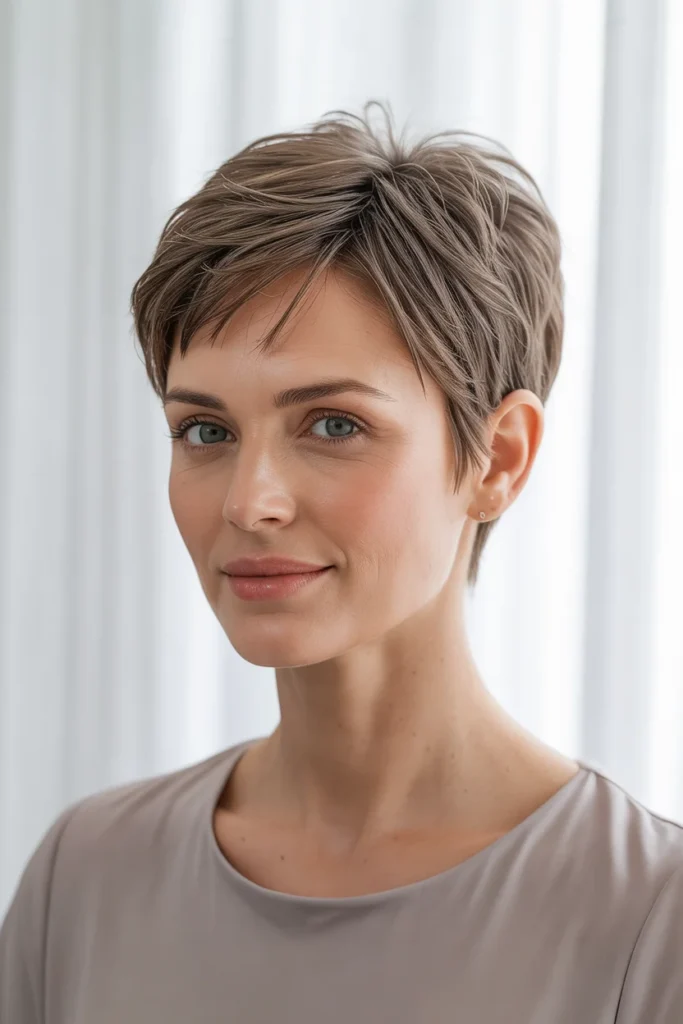
- Start lightly: Apply a small amount of volumizing mousse to damp roots.
- Dry upward: Use your fingers to lift the crown as you blow-dry.
- Create separation: Once dry, gently pinch individual layers to make them more visible.
- Finish carefully: Use a lightweight texture spray rather than a heavy styling wax.
Fine hair can benefit from a carefully planned short shape because the reduced length prevents the ends from becoming weighed down. Keep enough density through the crown so the haircut does not appear overly thin. A slightly tousled finish often makes fine strands look more substantial.
14. Tapered Sides

| Feature | Subtle Taper | Sharper Taper |
| Side length | Short but softly blended | Noticeably close-cut |
| Overall effect | Refined and understated | Bold and structured |
| Crown contrast | Moderate | Strong |
| Maintenance | Moderate | More frequent trims |
A tapered side profile gives the haircut a clean outline while allowing the top to remain textured. The subtle version works well for someone moving from a longer haircut into a pixie, while a sharper taper creates a stronger contrast. Both can be adjusted around the temples according to how much facial framing you prefer.
15. Curly Texture

DO:
- Let curls determine the final shape as much as possible.
- Use a curl cream or lightweight gel suited to your texture.
- Diffuse on a gentle setting when extra definition is needed.
- Leave enough length on top to prevent the curls from becoming overly compact.
DON’T:
- Brush dry curls aggressively.
- Remove too much length before seeing how the curl pattern contracts.
- Apply excessive product to short sections.
- Assume a straight-hair reference photo will produce the same silhouette.
Curly texture changes the visual proportions of a short haircut because curls contract as they dry. A stylist should consider the natural curl pattern and how individual sections behave. Keeping some length through the crown can preserve movement, while shorter sides help create a balanced outline.
16. Feathered Layers

Hair Length: Short sides with feathered movement through the crown and front.
Texture: Straight to wavy textures make the feathering easy to show.
Finish: Soft, airy ends rather than sharply separated pieces.
Best For: A feminine short haircut with visible movement.
Styling Time: Usually quick once the shape is established.
Feathered layers soften the stronger angles of a choppy haircut by allowing the ends to taper outward. Blow-dry the front away from the face with a small brush if you want more lift and direction. A flexible hairspray can hold the shape without making the layers feel stiff.
17. Shaved Side Detail

A shaved-side pixie creates a strong contrast between the close-cut section and the longer textured top. The longer hair can be swept across the head, lifted into a small textured quiff, or styled forward for a more compact appearance. This gives the haircut several distinct moods without changing the basic cut.
The boldest version suits women who are comfortable with regular maintenance around the shaved section. If you want the same visual idea with less commitment, ask for a very short tapered side instead. That creates contrast while leaving more room for the hair to grow out naturally.
18. Soft Feminine Texture
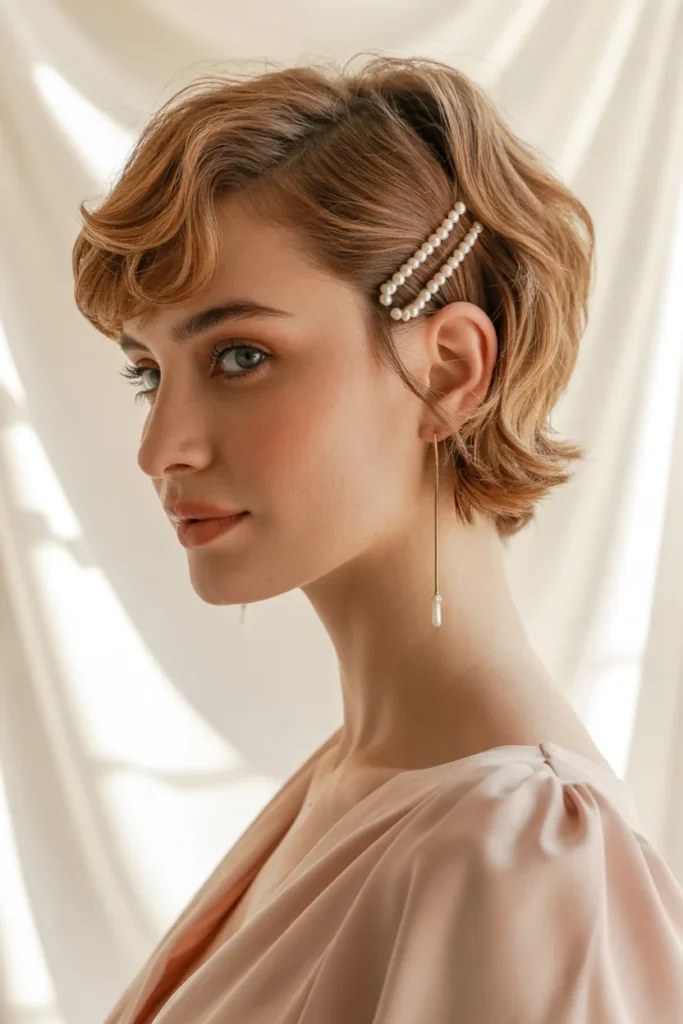
A softer choppy pixie keeps the texture visible but avoids extremely sharp edges or dramatic contrasts. The crown has gentle layers, the front pieces frame the forehead, and the sides remain close enough to maintain the compact pixie shape. A natural-looking finish keeps the style relaxed rather than overly sculpted.
This approach works nicely for women who want short hair while retaining a delicate appearance. Slightly wavy hair can be encouraged with a lightweight cream, while straight hair can be softly curved around the face with a small styling brush. Pearl earrings, soft makeup, or a side part can complement the feminine shape for special occasions.
19. Piecey Layered Finish
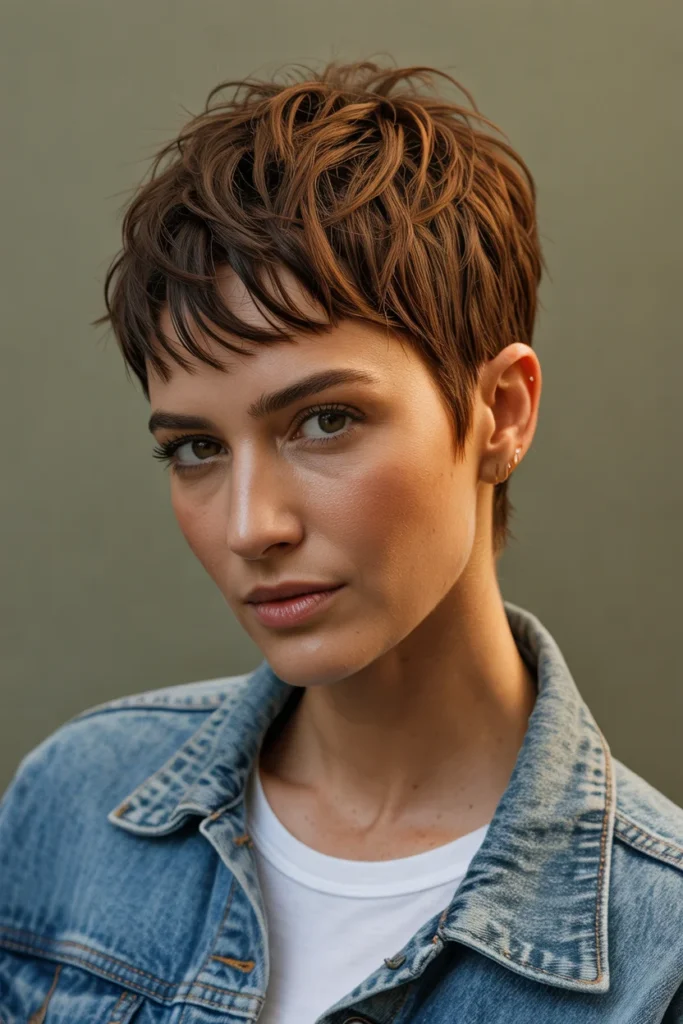
The final look centers on clearly separated layers rather than a smooth, uniform surface. Shorter pieces around the crown create lift, while slightly longer ends add dimension around the front and sides. The result feels modern and textured, especially when the ends are defined with a small amount of matte paste.
For everyday styling, rub a tiny amount of product between your fingertips and pinch selected pieces instead of coating the whole haircut. This keeps the finish light and lets the natural movement remain visible. The same cut can also be brushed flatter for work or styled upward for a more edgy evening look.
How to Choose the Right Choppy Pixie Cut
Start with your natural hair texture and density rather than choosing a style based only on a photograph. Straight hair can show precise piecey layers clearly, while wavy and curly hair need enough room for their natural pattern to form.
Face shape can also guide the proportions:
- Oval faces: Most pixie proportions can work, so focus on the texture and finish you prefer.
- Round faces: More height at the crown and less width at the sides can create a longer-looking outline.
- Heart-shaped faces: Side-swept or longer front pieces can balance a wider forehead.
- Square faces: Softer layers and movement around the temples can reduce the appearance of sharp angles.
- Long faces: Avoid excessive height if you do not want to visually lengthen the face further.
Think about your daily routine as well. A heavily textured or undercut style may require more frequent salon visits, while a softer layered version can be easier to grow out.
How to Style a Choppy Pixie Cut
Begin with damp hair and choose a product based on your texture. Fine hair usually benefits from lightweight mousse or volumizing spray, while thicker or coarser hair may need a flexible cream to control the ends.
Blow-dry the crown in the direction you want it to sit. For more volume, lift the roots with your fingers. For a smoother result, use a small brush and direct the hair along the head.
Once the hair is dry, use a small amount of paste or texture cream to separate selected pieces. Focus on the ends rather than applying product everywhere. A light finishing spray can help hold the shape without removing its movement.
For curly hair, work with the curl pattern instead of trying to force every section straight. A diffuser can help maintain definition while reducing the need for repeated heat styling.
Choppy Pixie Cut Maintenance Tips
Short textured cuts depend on their shape, so regular trims help preserve the intended proportions. The exact timing varies according to how quickly your hair grows and how short the sides are, but very short styles generally need more frequent upkeep than longer layered haircuts.
Keep these habits in mind:
- Use heat protection whenever you regularly blow-dry or heat-style.
- Condition the hair regularly, especially after coloring or lightening.
- Avoid heavy products that can flatten short layers.
- Trim bangs before they become difficult to style.
- Refresh texture with a small amount of product instead of repeatedly restyling with high heat.
- Ask your stylist how much internal weight should be removed based on your density.
- Bring a reference photo that shows the front, side, and back whenever possible.
Humidity can also change the finish. Wavy and curly hair may expand, while fine straight hair can lose volume. Choosing products according to your natural texture usually gives a more reliable result than trying to recreate a completely different hair type.
Frequently Asked Questions
Is a choppy pixie cut easy to style?
Yes, many versions can be styled in just a few minutes because the short length dries quickly. The main requirement is maintaining the haircut’s shape and using a small amount of suitable styling product. More elaborate versions with long bangs or strong texture may take a little longer.
Is a choppy pixie cut good for fine hair?
It can be a useful choice for fine hair because shorter lengths are less likely to become weighed down. However, excessive thinning or too many layers can make fine strands look sparse. Keeping sufficient density through the crown is usually more helpful for creating a fuller appearance.
How often should you trim a choppy pixie cut?
The ideal schedule depends on the length and how quickly your hair grows. Very short sides, shaved details, and defined bangs generally need more frequent trims to maintain their shape. Softer versions can often be allowed to grow longer before another haircut is needed.
Can a choppy pixie cut work with curly hair?
Yes. Curly hair can create beautiful movement in a short textured cut, but the haircut should be planned around the natural curl pattern and shrinkage. Keeping enough length in selected areas can prevent the curls from becoming too compact after drying.
How can you make a choppy pixie cut look more feminine?
Try softer layers, wispy or side-swept bangs, gentle face-framing pieces, and a less rigid finish. You can also create a smooth side part or softly curve the front away from the face. Accessories such as delicate earrings can complement a short haircut without changing its shape.
Final Thoughts
A choppy pixie cut can be adapted in many ways, from soft feathered layers and wispy bangs to bold undercuts and shaved sides. The most flattering version depends on your hair density, natural texture, face shape, styling routine, and how often you want to visit the salon. Fine hair may benefit from controlled layers and lightweight products, while thick or curly hair may need more thoughtful weight distribution.
Save this guide on Pinterest so you can compare your favorite shapes before your next appointment. Bring a few reference photos to your stylist, then choose the version that fits both your personal style and everyday routine.