27 Layered Hair With Bangs Ideas You’ll Want to Try
Layered Hair With Bangs can completely change the shape and movement of a haircut without requiring an extreme length change. Layers add dimension through the mid-lengths and ends, while bangs can frame the forehead and bring attention toward the eyes and cheekbones.
From soft shoulder-length cuts to long waves, textured bobs, and polished straight styles, there are plenty of ways to combine the two. Below, you’ll find 27 wearable ideas with styling details, hair type considerations, maintenance notes, and practical tips to help you choose a look that fits your texture, face shape, lifestyle, and personal style.
1. Soft Layered Curtain Bangs

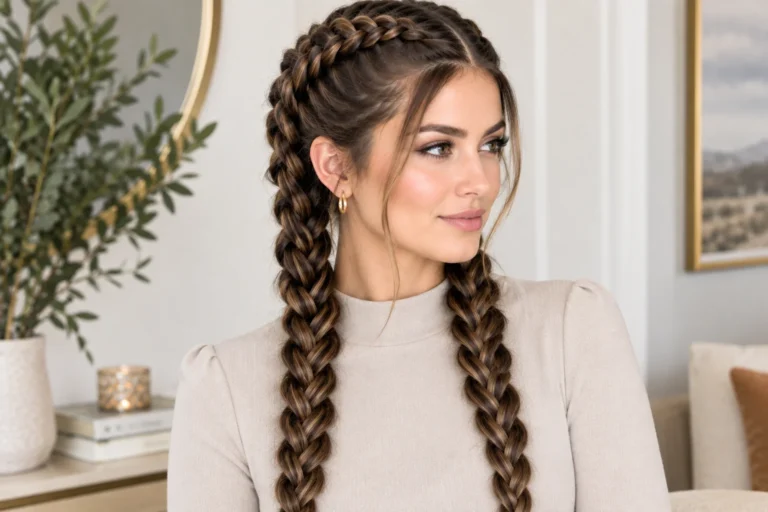
Soft layers beginning around the cheekbones blend naturally into curtain bangs that part gently at the center. The overall shape keeps plenty of length while adding movement around the face. Loose waves make the layers more noticeable, while a smooth blowout gives the haircut a polished appearance.
This version suits medium to long hair and works particularly well when the hair already has some natural movement. Curtain bangs can be adjusted in length depending on your features. Keep the shortest pieces light rather than heavily chopped so they grow out gracefully between trims.
2. Textured Shoulder-Length Cut

- Length: The ends sit around the shoulders, making this an easy length for everyday styling.
- Texture: Soft waves bring out the separation between the layers without creating a messy finish.
- Bangs: Wispy bangs can sit just above the brows and blend into shorter face-framing pieces.
- Volume: Layering through the crown gives straight or slightly wavy hair more visible movement.
- Maintenance: Regular shaping keeps the shoulder-length ends from becoming heavy.
The combination works especially well for someone who wants noticeable texture without committing to very long hair. Use a lightweight mousse before blow-drying, then gently bend the ends with a curling iron or flat iron for a relaxed finish.
3. Long Layers With Wispy Fringe

Quick Tip: Blow-dry wispy bangs with a small round brush, directing the hair slightly downward first and then sweeping it into place. Avoid applying heavy oil directly to the fringe because it can make lightweight bangs separate.
Long layers keep the main length intact while wispy fringe softens the forehead area. The cut works nicely on straight, wavy, and loosely curly hair. A center or slightly off-center part can change the balance of the style, while loose bends through the ends emphasize the layered shape.
4. Face-Framing Layered Lob

BEFORE
A blunt lob can sometimes look visually heavy around the jaw, especially when the ends have very little movement. Straight bangs may also create a strong horizontal line across the forehead.
AFTER
Face-framing layers soften the sides of the lob while keeping the haircut structured. Light, parted bangs create a more open appearance around the eyes, and subtle bends through the ends prevent the cut from looking too rigid.
To maintain this result, ask for gradual layers rather than large sections removed from the ends. A round brush can add slight lift at the roots while keeping the overall shape smooth.
5. Feathered Layers With Side Bangs

- Start with damp hair and apply a lightweight heat protectant through the lengths.
- Blow-dry the side bangs across the forehead using a round brush, then direct them away from the face.
- Dry the feathered layers with the brush angled slightly outward to encourage movement.
- Add loose bends to the mid-lengths if extra definition is desired.
- Finish with a light flexible spray instead of a stiff-hold product.
This style is particularly useful for medium to thick hair because the feathered layers help distribute visual weight. Side bangs also offer flexibility because they can be brushed forward, swept outward, or tucked behind one ear.
6. Sleek Layers With Blunt Bangs

| Feature | Sleek Finish | Soft Finish |
| Texture | Straight and polished | Slightly bent |
| Bang Shape | Blunt and defined | Lightly separated |
| Volume | Low to moderate | Moderate |
| Styling Time | Around 10 to 15 minutes | Around 15 to 20 minutes |
Both finishes keep the layered haircut recognizable while creating different moods. Straight styling highlights the precision of the bangs and the clean shape of the ends. A softer finish allows the layers to move more visibly and can be useful for naturally wavy hair.
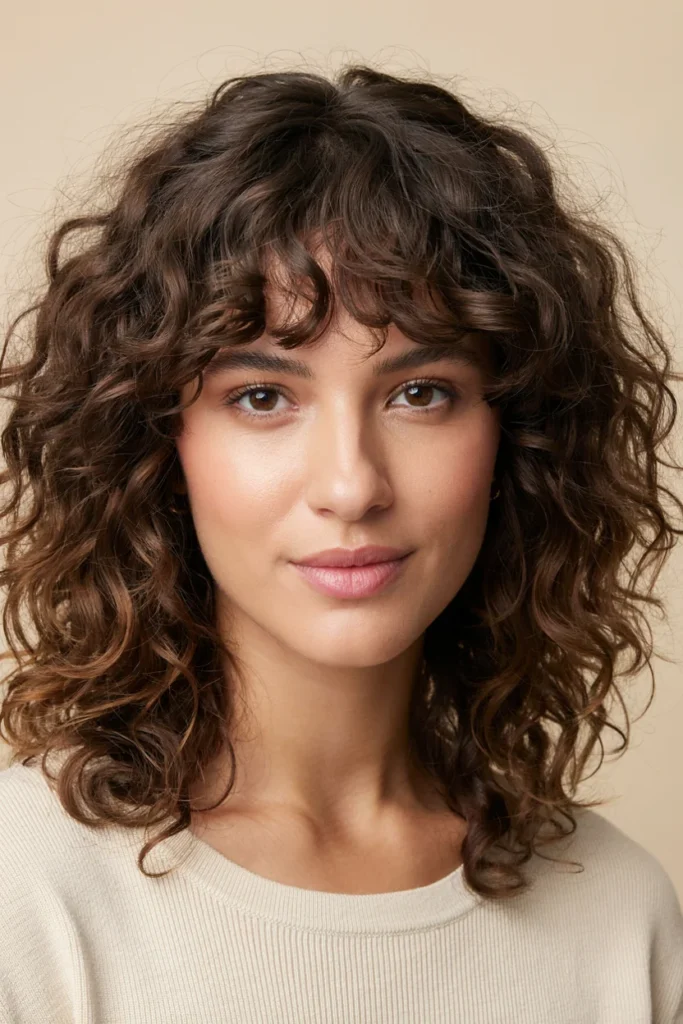
7. Curly Layers With Curly Bangs
DO:
- Shape the layers according to the natural curl pattern.
- Use a curl cream or lightweight leave-in conditioner to support definition.
- Allow curly bangs to dry in their natural direction rather than repeatedly brushing them.
- Keep enough weight in the lower layers to prevent excessive puffiness.
DON’T:
- Over-layer tightly coiled hair without considering shrinkage.
- Brush dry curls aggressively.
- Use excessive heat to straighten the bangs every day.
- Apply heavy products directly at the roots.
Curly hair often looks best when the layers are planned around the curl pattern rather than treated like straight hair. The bangs should also be cut with shrinkage in mind because they may appear considerably shorter after drying.
8. Long Shag With Curtain Fringe
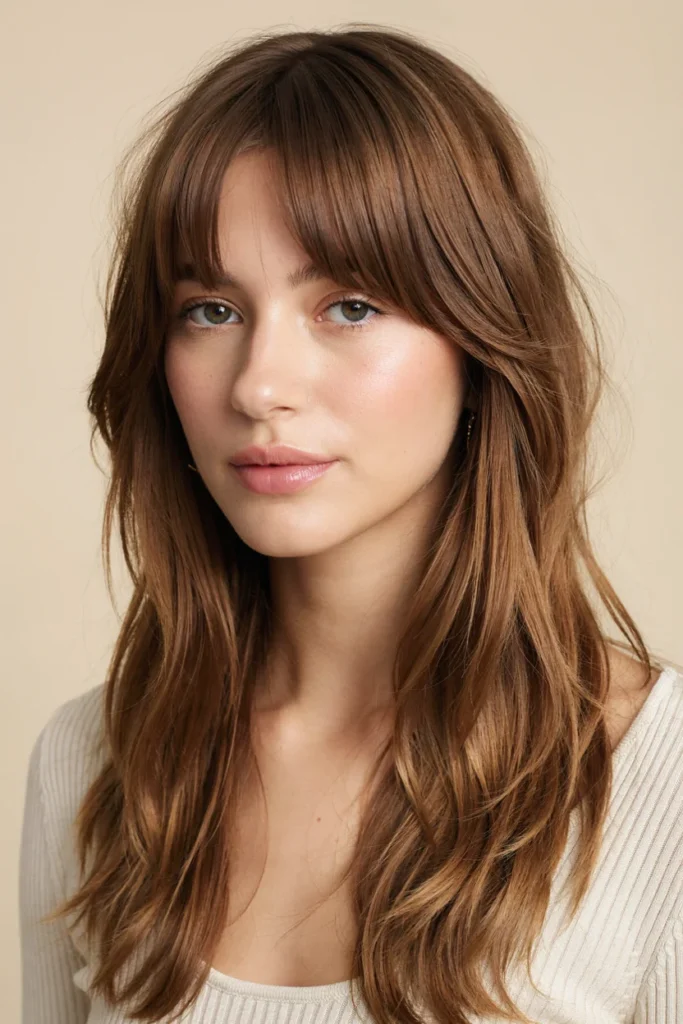
- Hair Length: Medium to long.
- Texture: Best suited to naturally wavy or textured hair, though straight hair can be styled to create similar movement.
- Layer Placement: Shorter pieces begin higher around the crown and face.
- Fringe: Curtain bangs open around the center and merge into the cheekbone layers.
- Styling Time: Moderate, depending on natural texture.
A long shag gives layered hair a more textured silhouette without requiring a short haircut. Scrunching damp hair with a lightweight styling cream can help enhance natural waves. For straighter hair, a large curling iron can create loose bends through selected sections.
9. Layered Bob With Soft Bangs

A chin to jaw-length bob becomes more dimensional when soft layers are introduced around the sides and crown. The bangs can sit just above the eyebrows or slightly longer for a relaxed look. Subtle texture at the ends prevents the haircut from appearing overly solid.
This shape works particularly well for fine to medium hair because carefully placed layers can create the appearance of movement without removing too much density. A root-lifting mousse can provide extra body, while a small round brush helps shape the bangs.
10. Wispy Bangs With Long Layers
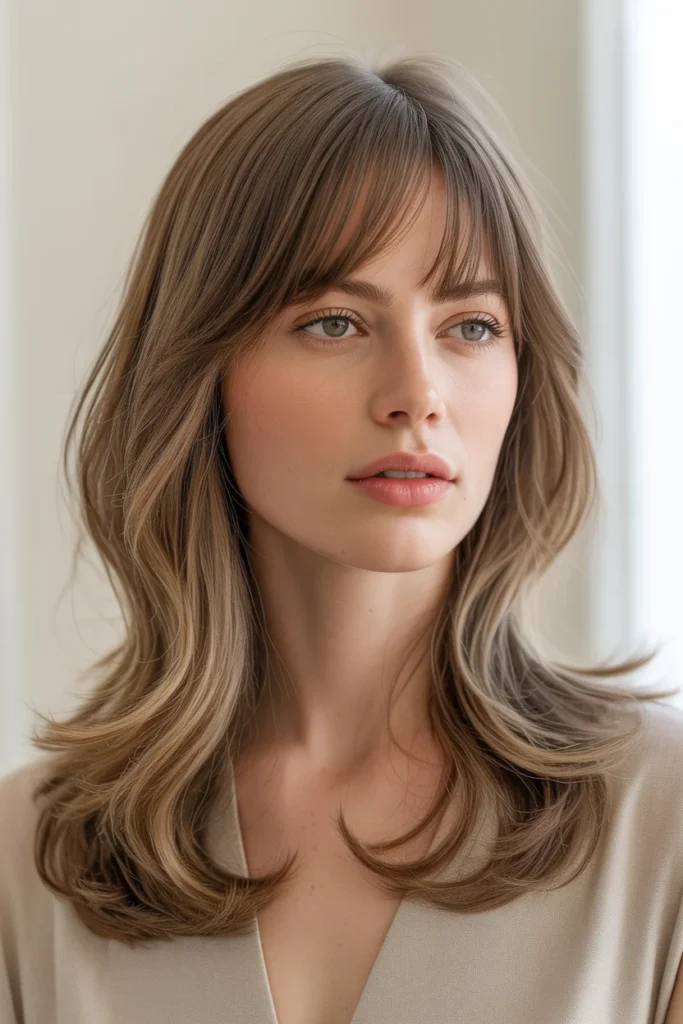
Quick Tip: When styling wispy bangs, separate them into a few small sections instead of drying the entire fringe together. This creates natural spacing and prevents the bangs from forming one heavy line across the forehead.
Long layers keep this haircut versatile for ponytails, half-up styles, and loose waves. The wispy fringe adds softness without dominating the haircut. Fine hair benefits from keeping the lower layers relatively full, while thicker hair can handle more internal movement.
11. Medium Layers With Bottleneck Bangs

BEFORE
Medium-length hair can sometimes appear flat around the face when the ends all fall at the same level. A conventional straight fringe may also make the forehead area look visually heavier.
AFTER
Bottleneck bangs begin narrower near the center and gradually widen toward the temples. Combined with medium layers, they create a tapered frame that follows the natural shape of the face.
For styling, use a medium round brush to curve the bangs slightly away from the forehead. Keep the layers softly bent rather than tightly curled so the haircut maintains a modern, wearable shape.
12. Choppy Layers With Full Fringe
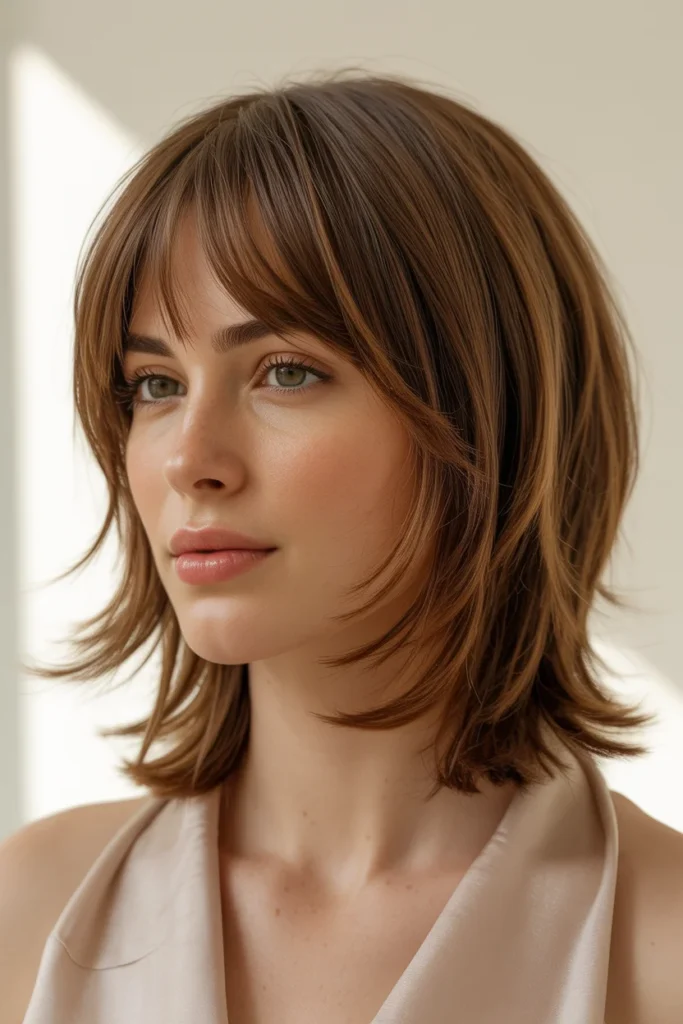
- Apply heat protectant and a small amount of volumizing mousse to damp hair.
- Rough-dry the hair until it is mostly dry, keeping the roots lifted with your fingers.
- Use a round brush to smooth the full fringe while maintaining a slight curve.
- Add texture to selected mid-length sections with a flat iron or curling wand.
- Finish by separating the ends with a small amount of lightweight styling cream.
The choppy layers give straight or slightly wavy hair more visible texture. Full bangs create stronger framing, so keeping the surrounding layers soft helps balance the overall haircut. This style can work for casual outfits as well as more polished evening looks.
13. Face-Framing Layers With Side Fringe

| Feature | Subtle Frame | Defined Frame |
| Face Pieces | Long and blended | Shorter around cheekbones |
| Fringe | Light side sweep | More noticeable side bang |
| Texture | Smooth waves | Textured bends |
| Maintenance | Lower | Moderate |
The subtle version is useful for someone who wants a gradual change, while the defined frame creates more visible structure around the face. Both can be adapted to straight or wavy hair. A side part generally works well with this shape because it naturally directs the fringe across the forehead.
14. Layered Hair With Arched Bangs
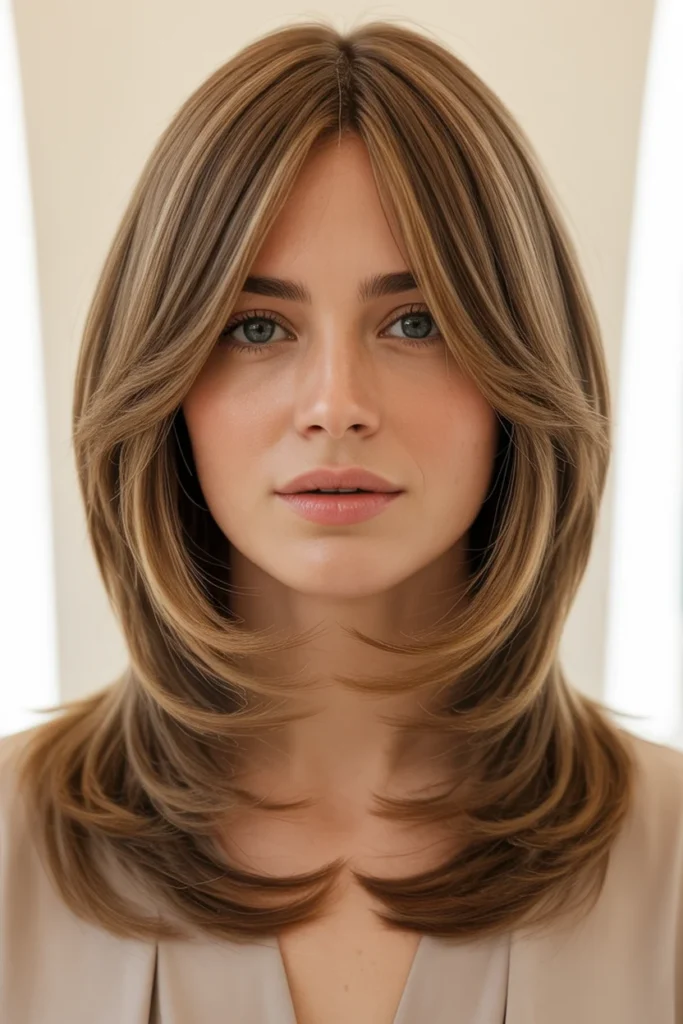
DO:
- Keep the arch gentle rather than extremely curved.
- Blend the longer outer sections into the face-framing layers.
- Use a round brush to create controlled movement.
- Keep the ends light enough to show the individual layers.
DON’T:
- Cut the center too short without considering your preferred styling.
- Create a harsh contrast between the bangs and surrounding layers.
- Overuse strong hairspray that makes the fringe rigid.
- Ignore natural cowlicks near the hairline.
An arched fringe can add structure while still feeling soft when the outer edges transition gradually into the haircut. It is especially useful when you want the bangs to frame the eyes without creating a completely straight line across the forehead.
15. Shoulder-Length Waves With Fringe

Hair Length: Shoulder length
Hair Texture: Straight, wavy, or lightly textured
Best Feature: Loose movement through the ends
Styling Time: About 15 minutes
Best Occasion: Everyday wear, casual outings, and dinners
Loose waves give shoulder-length layers enough movement to prevent the ends from sitting heavily against the shoulders. Keep the fringe slightly separated so it blends naturally with the shorter layers. A lightweight texturizing spray can help hold the waves without making the hair feel stiff.
16. Layered Hair With Curtain Fringe

A center-parted curtain fringe creates a soft opening across the forehead, while long layers add movement through the sides and back. The haircut can look sleek when blow-dried or more relaxed when styled with loose waves.
For a fuller appearance, direct the roots upward while drying and then sweep the curtain fringe outward. This technique is particularly useful for fine or medium-density hair because it adds lift without requiring large amounts of product.
17. Shaggy Layers With Piecey Bangs

Quick Tip: Work a small amount of texture cream between your fingertips before touching the ends. Pinch only a few sections to create separation instead of coating the entire haircut.
Piecey bangs pair naturally with a shag-inspired layered shape because both rely on separation and movement. The shorter layers around the crown create volume, while the longer pieces maintain enough length for ponytails and half-up styles. This cut is particularly suited to naturally textured hair.
18. Long Straight Layers With Fringe

BEFORE
Very long straight hair can sometimes appear flat because the weight pulls the roots downward and leaves the ends with little movement. A straight fringe may also look disconnected if there are no shorter layers around the face.
AFTER
Long, gradual layers introduce movement without sacrificing the length. A softly shaped fringe connects to the face-framing pieces, creating a more continuous silhouette from the forehead to the ends.
Keep the longest layers relatively full if your hair is fine. For thicker hair, internal weight removal can help the layers sit more naturally without making the perimeter look thin.
19. Layered Shag Bob With Bangs

- Begin with damp hair and apply a lightweight volumizing product.
- Dry the roots while lifting them gently with your fingers.
- Use a round brush on the bangs, directing them slightly forward before shaping them into place.
- Add loose bends to selected sections of the bob.
- Finish by separating the ends with a small amount of styling paste.
The shag bob has a shorter silhouette with visible texture throughout the haircut. It can be especially practical for someone who wants a more expressive shape without committing to a very short pixie. Slightly messy styling enhances the layered construction.
20. Feathered Long Hair With Fringe
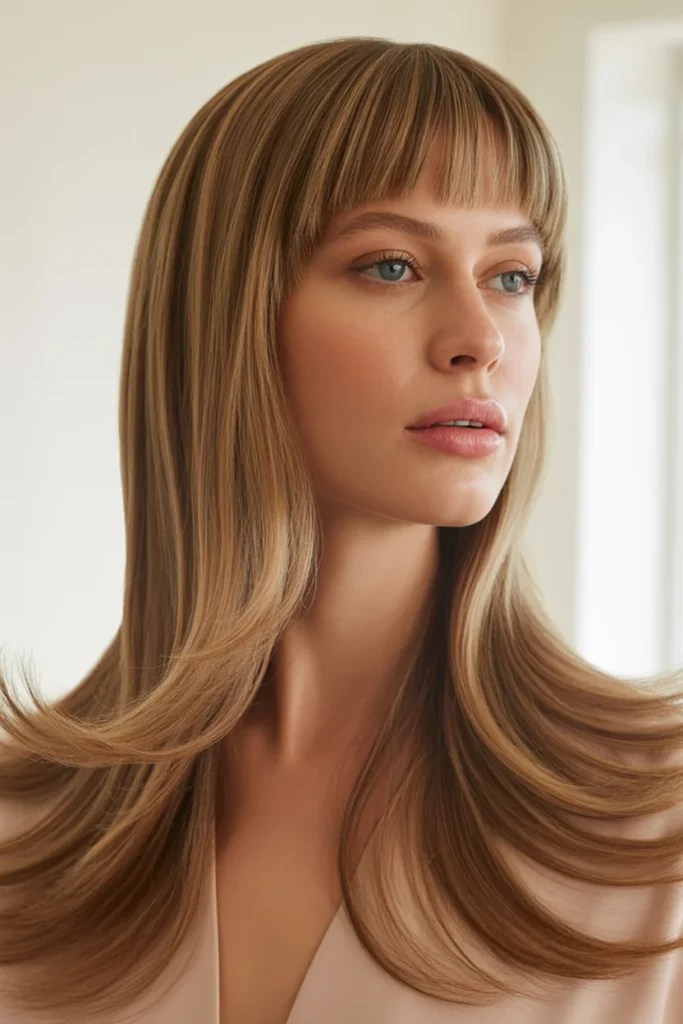
| Feature | Smooth Blowout | Soft Waves |
| Finish | Polished | Relaxed |
| Layer Definition | Moderate | High |
| Fringe | Curved and controlled | Lightly separated |
| Best Setting | Work or formal events | Casual or social occasions |
The haircut can move between polished and relaxed styling without changing the underlying shape. A smooth blowout highlights the feathered transitions, while waves make the layers look more textured. Keeping the fringe slightly shorter in the center and longer at the sides can help it blend into the feathered pieces.
21. Layered Lob With Curtain Bangs

DO:
- Ask for layers that begin around the cheekbones or lower.
- Keep the lob perimeter strong enough to retain its shape.
- Blow-dry the curtain bangs away from the center part.
- Add soft bends through the ends for extra movement.
DON’T:
- Remove too much weight from fine hair.
- Make every layer the same length.
- Over-curl the lob, which can make it appear shorter.
- Apply heavy smoothing products near the roots.
This combination balances the structure of a lob with the softness of curtain bangs. It is also adaptable to different textures. Straight hair can be polished with a flat iron, while wavy hair can be enhanced with a diffuser and lightweight curl product.
22. Medium Shag With Curtain Bangs

Hair Length: Collarbone to shoulder length
Hair Type: Straight, wavy, or naturally textured
Layering: Noticeable crown and face-framing layers
Bang Style: Center-parted curtain fringe
Maintenance: Moderate
The medium shag creates movement throughout the haircut while curtain bangs soften the front. For naturally wavy hair, scrunching with a lightweight mousse can bring out the layers. Straighter hair may need a few loose bends around the face to reproduce the same textured appearance.
23. Rounded Layers With Brow-Grazing Bangs

Rounded layers create a soft silhouette that follows the head rather than producing sharply separated steps. Brow-grazing bangs sit close to the eyebrows and provide stronger framing around the eyes. The combination works well with medium to thick hair when the layers are carefully distributed.
For a smooth result, dry the bangs with a small round brush and keep the ends slightly curved. If your hair is naturally thick, ask for controlled weight removal through the interior rather than thinning the entire perimeter.
24. Long Curly Layers With Fringe

- Apply leave-in conditioner to damp curls, concentrating on the mid-lengths and ends.
- Add curl cream and gently scrunch upward.
- Shape the fringe with your fingers while the hair is still wet.
- Diffuse using low to medium heat until the curls are mostly dry.
- Allow the hair to finish drying naturally before separating a few curls.
Curly layers should account for shrinkage and the natural direction of the curl pattern. Keeping the fringe slightly longer than it appears when wet can provide useful room for shrinkage. Avoid repeatedly brushing the curls after they dry, as this can disrupt definition.
25. Polished Layers With Side-Swept Bangs

| Feature | Straight Style | Brushed-Out Waves |
| Bang Direction | Smooth side sweep | Softer side sweep |
| Layer Appearance | Clean and defined | More blended |
| Root Volume | Low to medium | Medium |
| Finish | Refined | Soft and dimensional |
The straight version emphasizes the haircut’s clean lines and works well for professional settings. Brushed-out waves give the same cut a softer appearance for dinners, celebrations, or weekend styling. A lightweight finishing serum can reduce flyaways without weighing down the roots.
26. Short Layered Cut With Soft Fringe

Quick Tip: For a short layered haircut, dry the fringe before the rest of the hair so you can control its direction while it is still damp. Use your fingers or a small brush rather than repeatedly passing a flat iron over short pieces.
Short layers create a compact silhouette with plenty of visible movement. A soft fringe keeps the front from looking too severe, while texture through the crown gives the haircut a fuller appearance. This length requires more frequent shaping, especially if you want the bangs to remain at a specific position.
27. Voluminous Layers With Curtain Bangs

Hair Length: Long or medium-long
Texture: Loose waves or a smooth blowout
Volume: Highest through the crown and face-framing sections
Best For: Hair that needs more visible movement
Styling Tools: Round brush, large curling iron, or rollers
This final combination focuses on creating body without sacrificing length. Large, soft bends make the layers easier to see, while curtain bangs frame the upper face and connect with the shorter pieces. For fine hair, velcro rollers at the crown can provide temporary lift without requiring excessive product.
Helpful Styling Tips for Layered Hair With Bangs
Choose Layers Based on Hair Density
Fine hair usually benefits from fewer, more deliberate layers because removing too much density can make the ends appear thin. Thick hair may tolerate more internal layering to reduce bulk and help the haircut move naturally.
Consider Your Natural Texture
Straight, wavy, curly, and coily hair can all work with layered cuts, but the placement should account for how the texture behaves when dry. Curly hair, in particular, can shrink significantly, so the final length of bangs should be planned with the natural curl pattern in mind.
Keep Bangs Practical
Bangs generally need more frequent trimming than the rest of the haircut because small changes in length can alter their shape. If you prefer lower-maintenance hair, consider curtain bangs, longer side bangs, or wispy fringe that can blend into the surrounding layers as they grow.
Use Heat Protection
Frequent blow-drying, curling, and straightening can make the hair more prone to dryness and breakage. Apply an appropriate heat protectant before using hot tools, and avoid repeatedly applying high heat to the same section.
Adjust the Styling to Your Face Shape
Face shape does not have to determine your haircut, but it can help guide layer and bang placement. Longer face-framing pieces can create a softer vertical frame, while cheekbone layers can bring more attention toward the middle of the face. Your natural hair texture and preferred styling routine should also influence the final cut.
Add Volume Without Heavy Product
For fine or flat hair, start with a lightweight mousse or root-lifting product instead of layering several heavy products. Blow-drying the roots in the opposite direction of their natural fall can create temporary lift, which can then be brushed into place.
Keep Humidity in Mind
Humidity can change the appearance of layered hairstyles, particularly on wavy and curly hair. Anti-frizz products can help control unwanted expansion, while texture-friendly styling products may be better than trying to force naturally textured hair completely straight.
Conclusion
There are many ways to wear Layered Hair With Bangs, from soft curtain fringe and long feathered layers to textured bobs, curly cuts, shaggy shapes, and polished straight styles. The most useful choice depends on your hair density, natural texture, preferred length, styling time, and the amount of maintenance you are comfortable with.
Think about where you want movement, how you normally style your bangs, and whether you want a soft or more defined shape. Save this collection on Pinterest for your next salon appointment, then bring a few favorite ideas to your stylist so the layers and fringe can be adapted to your individual hair.
FAQs
1. Is layered hair with bangs good for fine hair?
Yes, but the amount of layering matters. Fine hair can benefit from strategically placed layers that create movement while keeping enough density through the ends. Very aggressive layering can make fine hair appear thinner.
2. Which bangs work well with long layered hair?
Curtain bangs, wispy bangs, side-swept bangs, and longer bottleneck bangs can all work well with long layers. The best choice depends on your preferred styling routine, natural texture, and how much forehead framing you want.
3. Can layered hair with bangs work for curly hair?
Yes. Curly hair can look especially dimensional with properly placed layers. The haircut should account for curl shrinkage, density, and the natural direction of the curls. Curly bangs should also be shaped with their dry appearance in mind.
4. How often should layered bangs be trimmed?
The timing depends on the desired length and shape. Short, brow-level bangs usually need more frequent maintenance, while longer curtain or side-swept bangs can be allowed to grow for longer before reshaping.
5. How can I make layered hair look fuller?
Use lightweight volumizing products, lift the roots while blow-drying, and avoid applying heavy products close to the scalp. For fine hair, keeping some fullness through the ends can also make the haircut appear denser.