
27 Fulani Braids Hairstyles You’ll Want to Try
Fulani Braids Hairstyles offer a beautiful mix of detailed braiding, clean parting, decorative beads, and versatile styling. Whether you prefer long braids, shorter lengths, curly ends, bold colors, or simple protective looks, there are plenty of ways to make the style your own.
This guide features 27 wearable ideas, from traditional-inspired patterns to modern combinations with ponytails, buns, feed-in sections, and face-framing braids. You’ll also find practical tips for choosing a style based on hair length, texture, maintenance needs, and occasion, so you can save your favorites and show your preferred look to your stylist.
1. Classic Fulani Braids

Classic Fulani braids combine neat central cornrows with individual braids flowing toward the back or sides. The pattern often includes a clean middle section, curved or straight rows, and carefully placed details that create a balanced look. The overall finish is structured without looking overly complicated.
This version works especially well for medium to long hair because the length gives the individual braids room to move. A stylist can adjust the braid thickness and parting to complement your natural density. Keep the edges neat but avoid excessive tension around the hairline, particularly if your strands are delicate.
2. Beaded Fulani Braids

- Accessories: Small or medium beads can be added near the ends or along selected braids.
- Length: Shoulder-length through extra-long versions can carry the decorative detail.
- Texture: Straight braiding hair creates a crisp, polished finish.
- Parting: A defined center or slightly offset part keeps the design organized.
- Occasion: Beaded versions work for everyday wear as well as cultural celebrations and special events.
The key is balance. Choose beads that complement the braid color rather than covering every section with decoration. For a lighter everyday look, place accessories on just a few face-framing or front braids.
3. Long Braided Lengths

Quick Tip: Long braids can become heavy, so ask for a comfortable braid size and avoid adding excessive extension hair. Keep the roots neat rather than tightly pulled, and use a lightweight scalp moisturizer when needed.
Extra-long braids create a dramatic silhouette as they fall past the waist or toward the hips. The length gives you plenty of room for ponytails, half-up styles, side sweeps, and decorative beads. This option suits people who enjoy changing their styling direction without removing the braids.
4. Medium-Length Braids
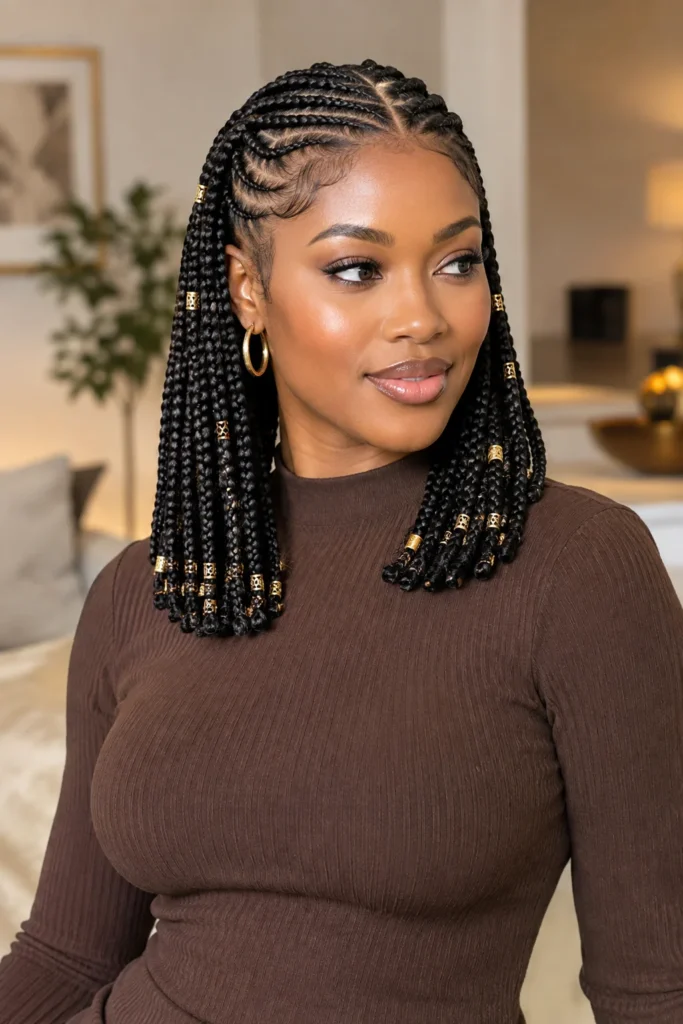
BEFORE
Medium hair can sometimes feel limited when choosing protective styles, especially when the desired look depends on significant length. The ends may sit around the shoulders, making some elaborate updos difficult to create.
AFTER
Medium-length Fulani braids keep the style detailed while remaining relatively easy to manage. The braids can finish around the upper back or shoulders, creating movement without excessive weight.
For a practical result, choose a braid length that works with your daily routine. Medium braids are particularly convenient if you want enough length for a low ponytail while keeping washing, wrapping, and sleeping manageable.
See Also 31 Short Crochet Twist Hairstyles That Are Cute & Protective
5. Short Braided Styles

- Prepare the hair: Start with clean, detangled, moisturized hair before sectioning.
- Create the pattern: Establish the central cornrow or decorative parting first.
- Braid the sections: Use smaller individual braids where you want more visual detail.
- Finish the ends: Seal or neatly finish the braid ends according to the extension hair being used.
Short Fulani braids can end around the jawline, neck, or shoulders and create a compact silhouette. They are useful for anyone who dislikes the weight of very long extensions. Add a few beads near the front for definition without making the overall style feel heavy.
6. Curly Ends
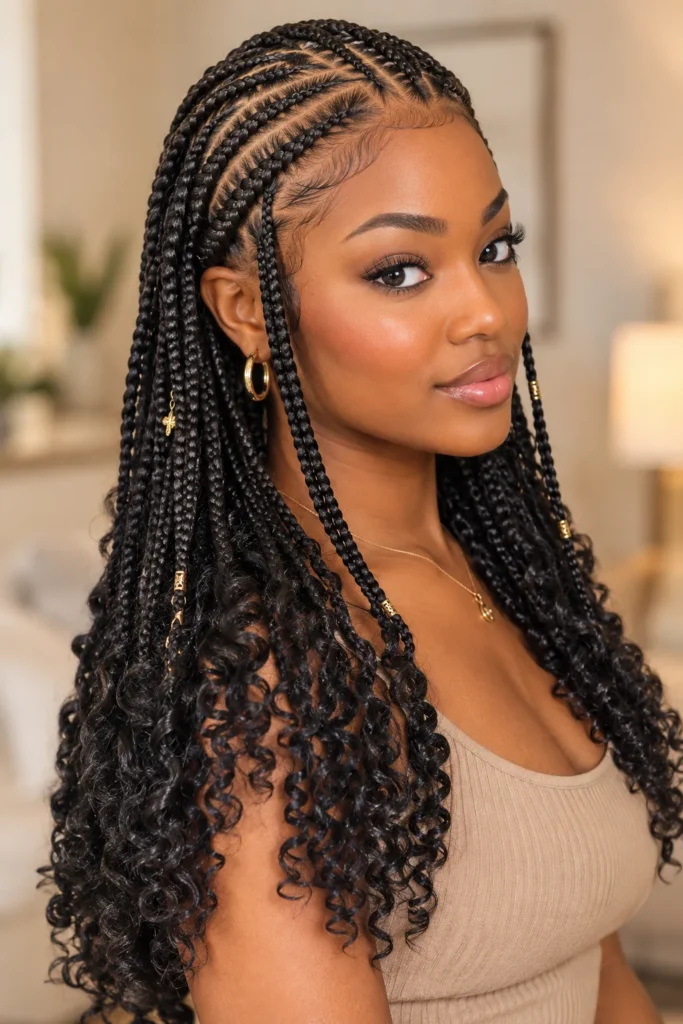
| Feature | Defined Curls | Loose Curls |
| Finish | Polished and springy | Soft and relaxed |
| Volume | More concentrated | More spread out |
| Maintenance | Requires curl refreshing | Easier to reshape |
| Best For | Dressier styling | Casual everyday wear |
Curly ends change the movement of traditional braids by giving the lower half a softer finish. Defined curls create a more noticeable contrast, while loose curls offer a relaxed appearance. Keep the braided portion secure and refresh the loose ends with a light curl product when they begin to lose shape.
7. Knotless Fulani Braids

DO:
- Start the braids with minimal added hair at the root.
- Keep sections even so the finished pattern looks balanced.
- Use lightweight extensions when creating longer lengths.
- Protect the braids at night with a satin or silk scarf.
DON’T:
- Make the sections unnecessarily tight.
- Add too much extension hair to small sections.
- Pull the finished braids repeatedly into tight styles.
- Ignore discomfort around the hairline.
Knotless construction creates a flatter transition at the roots and can give the style a lighter appearance. The technique is especially useful when you want a smooth base that blends naturally with the scalp while maintaining detailed Fulani-inspired patterns.
8. Cornrow Combination
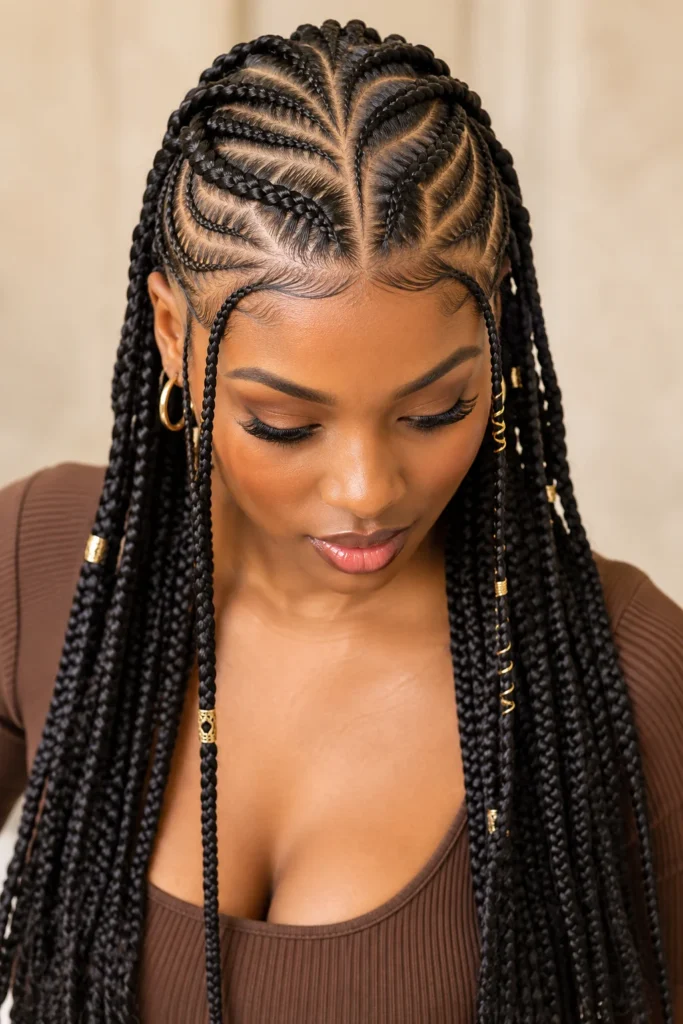
Hair Length: Medium to long
Pattern: Cornrows combined with individual braids
Texture: Straight or textured extension hair
Styling Time: Several hours depending on detail
Best Occasion: Everyday wear, events, and vacations
Combining cornrows with individual braids creates contrast between the close-to-scalp pattern and the freely hanging sections. Ask your stylist to vary the direction of selected rows for visual interest. A slightly curved pattern can also soften a very geometric design and create more movement around the face.
9. Tribal Pattern Details

Tribal-inspired patterns can include curved rows, geometric sections, small braids, and carefully arranged decorative details. The strongest designs usually have a clear visual rhythm rather than placing every possible pattern into one hairstyle.
This option gives you room to personalize the braid map before installation. Bring reference photos to your stylist and discuss which elements you want to keep, simplify, or adapt. For everyday wear, a moderately detailed pattern can provide visual interest while remaining easier to maintain than an extremely intricate design.
10. Half-Up Style
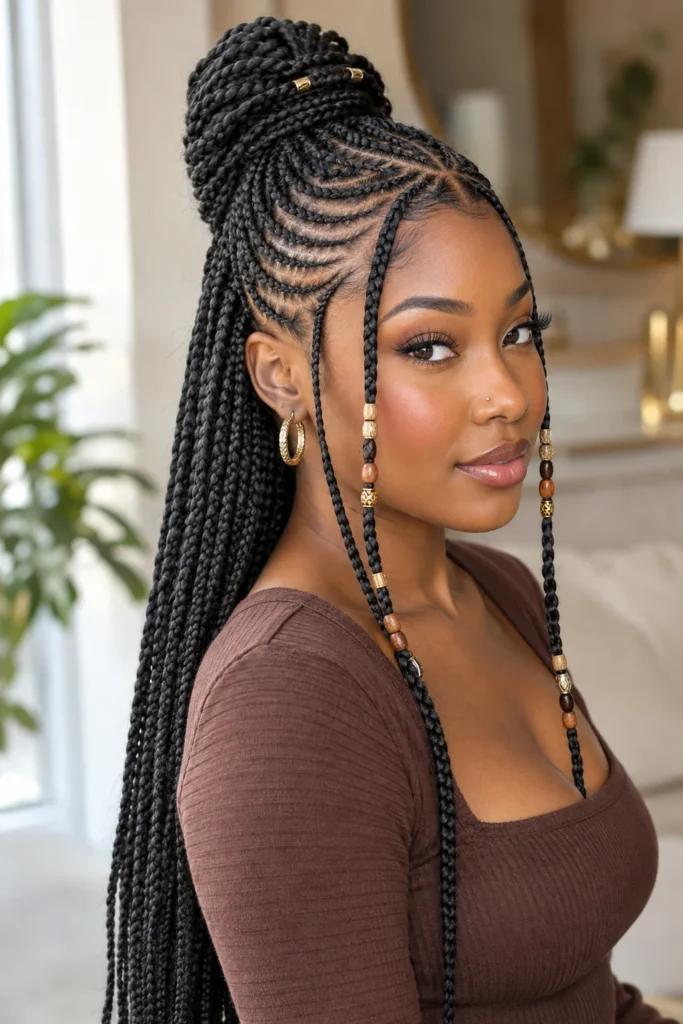
Quick Tip: Separate the upper braids before gathering them so the pattern remains visible. Use a soft hair tie or braid to secure the section rather than pulling the roots tightly.
A half-up Fulani style keeps the decorative braiding visible while creating height through the upper section. The remaining braids hang freely down the back, giving the hairstyle two distinct shapes. This arrangement works nicely for medium or long braids and can be adjusted for casual outfits or dressier occasions.
11. High Ponytail

BEFORE
Loose individual braids can sometimes lack a defined shape when left completely down, particularly with very long lengths.
AFTER
Gathering the braids into a high ponytail creates a lifted silhouette and puts the braid pattern around the scalp on display. The hanging lengths form a fuller shape above or behind the head.
Use a wide, gentle tie and avoid repeatedly securing the ponytail at exactly the same spot. If the braids are heavy, a slightly lower ponytail can reduce tension while still giving you a lifted finish.
12. Low Bun

- Smooth the base: Gently gather the braids toward the nape without pulling tightly.
- Create the bundle: Twist the braid lengths loosely into one section.
- Form the bun: Wrap the bundle around its base until the desired shape is reached.
- Secure it: Use pins or a soft tie designed to hold the weight comfortably.
A low bun turns detailed braids into a refined updo that works particularly well for dinners, ceremonies, weddings, and professional settings. The lower placement keeps the overall silhouette understated. Leave a few intentionally chosen braids around the front if you want the style to feel softer.
13. Gold Accessories

| Feature | Subtle Gold | Statement Gold |
| Amount | A few cuffs or beads | Multiple decorative pieces |
| Visual Effect | Refined detail | More noticeable finish |
| Best Length | Short to long | Medium to extra-long |
| Occasion | Everyday and work | Events and celebrations |
Gold accessories add warmth to dark or neutral braiding hair and can highlight specific parts of the pattern. Subtle cuffs are easier for everyday wear, while multiple decorative pieces create a more ornate result. Place accessories strategically instead of distributing them randomly across every braid.
14. Wooden Bead Accents
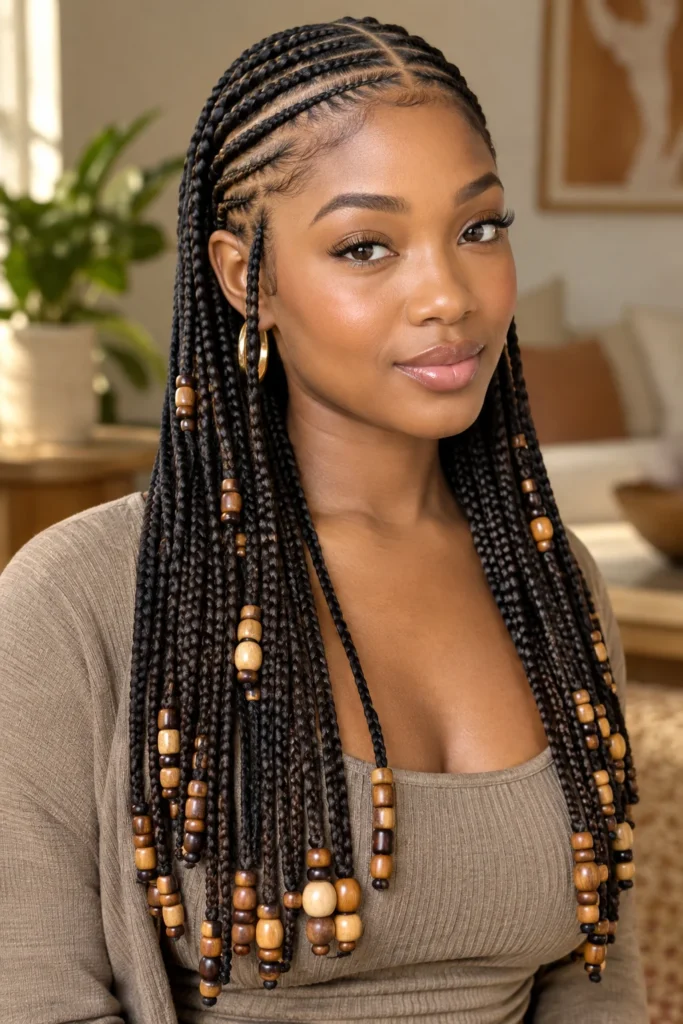
DO:
- Choose lightweight wooden beads when possible.
- Match bead size to the thickness of each braid.
- Place larger beads toward selected ends for visual balance.
- Check that beads do not snag surrounding braids.
DON’T:
- Overload small braids with heavy accessories.
- Force beads onto sections that are too thick.
- Sleep with loose accessories that catch easily.
- Ignore cracking or rough bead edges.
Wooden beads give the hairstyle an earthy, textured finish. Their natural appearance pairs especially well with dark brown, black, and warm-toned braiding hair. A small number of carefully positioned beads can create plenty of character without making the hairstyle feel overly decorated.
15. Blonde Highlighted Braids

Hair Color: Black or dark brown base with blonde sections
Contrast: Medium to high depending on highlight placement
Length: Medium to long
Maintenance: Keep exposed ends protected and refresh the overall style as needed
Best For: Bright seasonal looks and special occasions
Blonde highlights can be concentrated around the face, distributed through individual braids, or placed mainly toward the ends. Face-focused highlights create a brighter frame, while scattered pieces produce a more blended appearance. If your natural hair is dark, using colored extensions can create the effect without chemically lightening your own strands.
16. Brown Toned Braids

Brown braiding hair creates a softer alternative to an all-black style while still keeping the intricate pattern prominent. Warm chocolate tones suit a rich, understated appearance, while lighter brown shades create more visible contrast between individual braids.
For a dimensional result, combine two closely related brown shades rather than choosing a single flat color. This can make the braid pattern easier to see in photographs. Brown tones also pair naturally with wooden beads, gold accessories, and neutral outfits.
17. Burgundy Braids
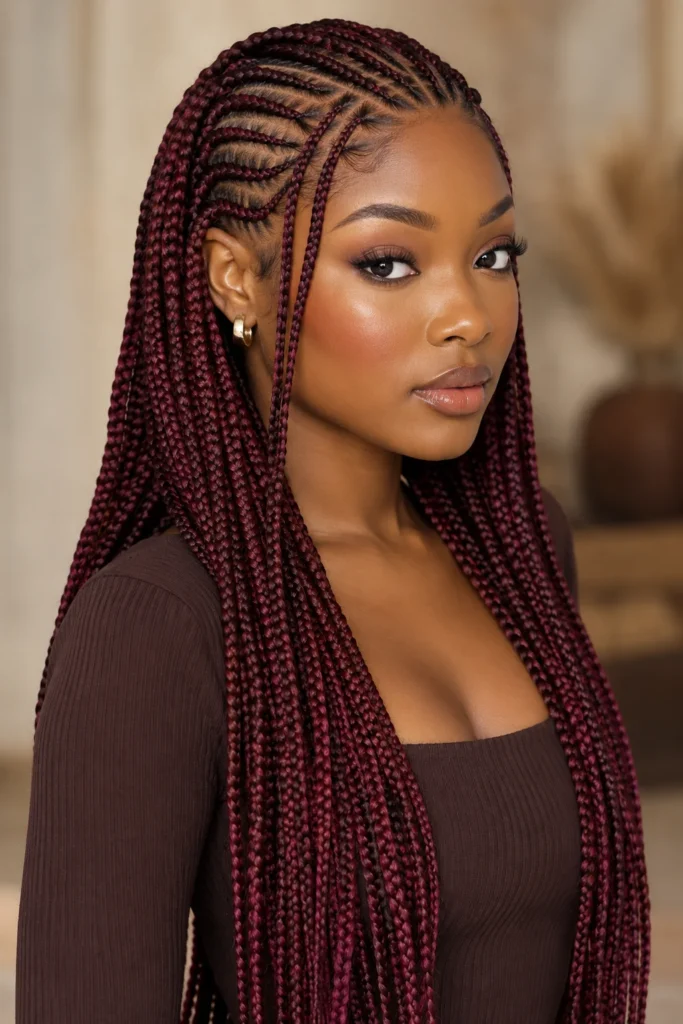
Quick Tip: Choose the depth of burgundy according to the effect you want. A dark wine tone gives subtle color in low light, while brighter burgundy becomes more visible against a dark base.
Burgundy braids add color without moving into an extremely bright palette. The shade works particularly well on long individual braids because the color becomes more noticeable as the lengths move. Keep accessories simple if you want the burgundy itself to remain the main visual detail.
18. Boho Curly Ends

BEFORE
Straight braid ends create a uniform finish from the roots through the lengths. While polished, the lower sections may have less movement.
AFTER
Adding loose curly or wavy ends creates a boho-inspired finish with more texture and softness. The curls break up the straight lines of the braids and give the lower half a lighter visual quality.
Protect the loose ends when sleeping and refresh them with a small amount of lightweight styling product. Avoid excessive brushing, which can make the curly sections frizzy and shorten their neat appearance.
19. Side-Part Designs

- Choose the part: Decide whether the side part should sit slightly off-center or closer to the temple.
- Map the pattern: Ask your stylist to direct nearby cornrows toward the chosen part.
- Build the braids: Keep the braid size consistent while allowing selected rows to curve.
- Finish the frame: Arrange front braids so they follow the natural contour of your face.
A side-part design shifts attention away from a strict center pattern and creates a more directional silhouette. It can also make the hairstyle appear asymmetrical without requiring an uneven haircut. The design works particularly well when the front braids are arranged to softly frame the cheekbones.
20. Heart-Shaped Patterns

| Feature | Small Heart Detail | Large Heart Pattern |
| Design | One subtle motif | Prominent geometric section |
| Visual Effect | Minimal decoration | Strong focal point |
| Styling Time | Lower | Higher |
| Best For | Everyday looks | Events and photos |
Heart-shaped cornrow details bring a playful element to the braid pattern. A small motif can sit near the temple or side, while a larger design can become the central feature. Because curved sections require careful parting, show your stylist the exact shape you prefer before installation.
21. Feed-In Braided Sections
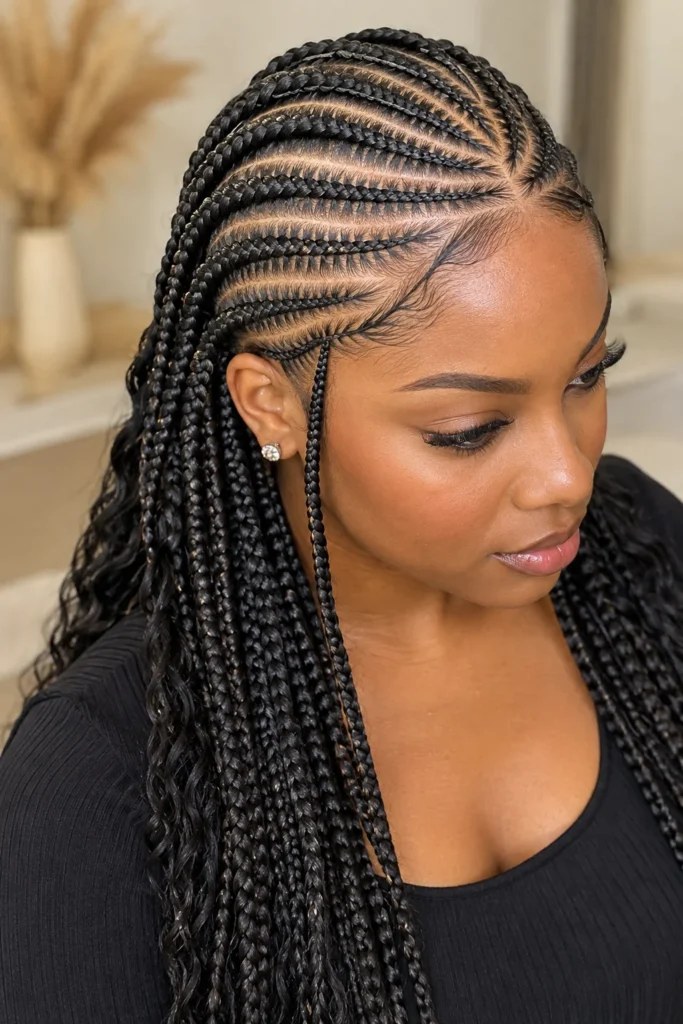
DO:
- Keep the added hair gradual at the beginning of each braid.
- Match the extension color closely if you want a natural blend.
- Use consistent section sizes throughout the pattern.
- Keep the front design comfortable around the hairline.
DON’T:
- Start with a large amount of extension hair.
- Make tiny sections carry excessive weight.
- Pull the feed-in braids tightly toward one direction.
- Skip regular scalp and hairline checks.
Feed-in techniques can help create clean, controlled rows with a gradual transition from the natural hair into the extension. They are especially useful when the desired pattern includes several cornrow sections that need to look smooth and uniform.
22. Jumbo Sections

Hair Length: Medium to long
Braid Size: Large and bold
Parting: Wider sections with fewer individual braids
Styling Time: Usually shorter than highly detailed small-braid designs
Maintenance: Relatively simple, but protect the roots from excess weight
Jumbo sections make the overall pattern easier to see from a distance. They are useful if you prefer fewer braids and a stronger graphic effect. Keep in mind that larger extensions can create more weight per braid, so comfortable section sizing matters, especially around the front and temples.
23. Small Detailed Braids

Small braids create a highly detailed finish and give the stylist more space to incorporate curved rows, beads, color changes, and decorative patterns. They also offer plenty of movement because individual sections are lightweight when appropriately sized.
The trade-off is installation time. Smaller braids generally require more sectioning and patience, and the finished style may take longer to remove. If you prefer intricate hairstyles and do not mind a longer appointment, this format gives you significant room for customization.
24. Face-Framing Braids

Quick Tip: Ask for the front braids to follow the natural shape of your hairline instead of pulling them straight backward. A few slightly curved sections can create softer framing around the forehead, temples, and cheek area.
Face-framing braids put extra attention around the front of the hairstyle. They can be thin and delicate or slightly thicker for a stronger graphic effect. This approach is particularly useful when you want the braid pattern to remain visible from the front rather than being hidden entirely by the side sections.
25. Protective Everyday Style

BEFORE
Daily manipulation can involve repeated brushing, heat styling, detangling, and pulling hair into tight ponytails. Over time, reducing unnecessary handling can be useful for people trying to maintain their natural hair.
AFTER
A carefully installed braided style can reduce the need for daily styling and keep the natural hair organized underneath. The protective benefit depends on proper installation, comfortable tension, and suitable maintenance.
Keep the scalp clean according to your normal hair-care routine and avoid keeping braids installed longer than your hair and scalp can comfortably tolerate. Protection comes from reducing manipulation, not from ignoring the condition of the hair underneath.
26. Elegant Occasion Braids
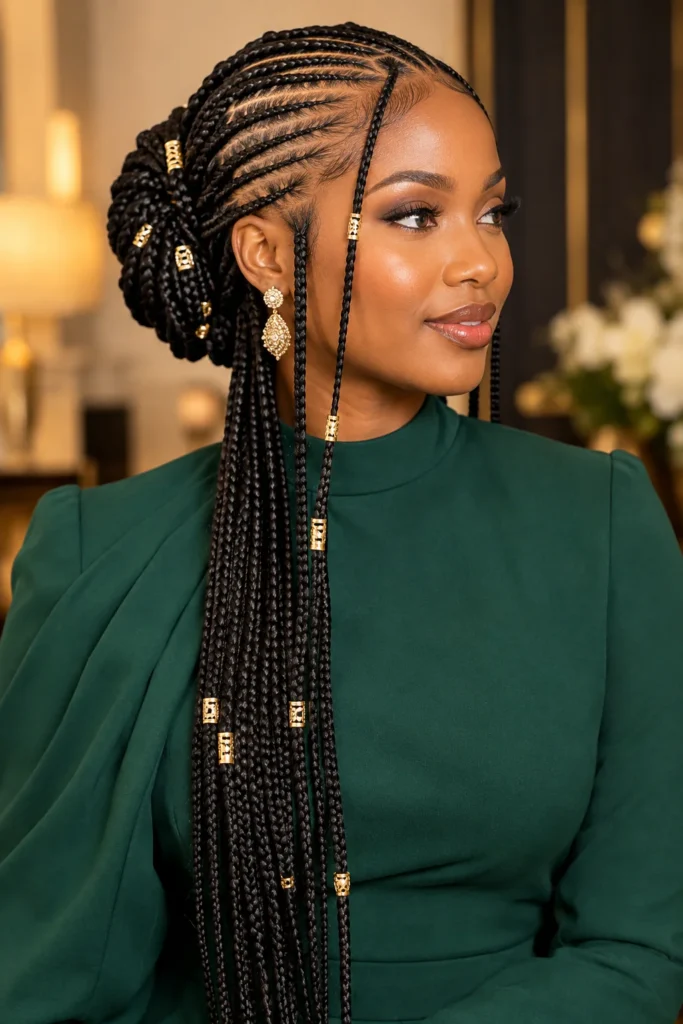
- Start with the base: Keep the braid pattern neat and polished so it works with formal clothing.
- Choose the arrangement: Pull selected braids into a low bun, side sweep, or controlled half-up shape.
- Add detail: Use a few gold cuffs, subtle beads, or another lightweight accessory.
- Finish carefully: Smooth visible flyaways and check that the updo remains comfortable.
For weddings, formal dinners, graduations, or celebrations, the styling arrangement can make braided hair feel more formal without changing the underlying pattern. A low bun creates a classic silhouette, while a half-up arrangement keeps more of the braid length visible.
27. Modern Mixed Details

| Styling Direction | Key Detail | Overall Feel |
| Curved Cornrows | Directional parting | Graphic |
| Curly Ends | Loose texture | Soft |
| Colored Braids | Brown, burgundy, or blonde | Modern |
| Accessories | Beads or cuffs | Decorative |
| Half-Up Finish | Lifted upper section | Versatile |
A modern interpretation can combine several carefully selected elements rather than relying on one dramatic feature. For example, curved cornrows, medium-length braids, a few beads, and softly curled ends can create variety without making the pattern difficult to understand. Keep one element as the main focus and let the others support it.
How to Choose the Right Style
Start with hair length and density. Longer hair gives you more options for ponytails, buns, and flowing braid lengths, while shorter hair can look striking with compact patterns and decorative details.
Next, consider how much styling you actually want to do. If you prefer a simple routine, medium-length braids with a straightforward pattern may be easier than extremely small braids with elaborate accessories.
Your hair texture and condition also matter. Fine or fragile strands may need lighter extensions and larger, comfortable sections. Very dense hair may require thoughtful sectioning so the finished style does not become unnecessarily bulky.
Finally, think about your face framing and lifestyle. A side part can create a different visual balance from a center part, while face-framing braids can bring more attention to the front. For formal events, a bun or half-up arrangement can change the overall feel without requiring a completely new hairstyle.
How to Maintain Fulani Braids
Good maintenance starts before installation. Clean and condition your natural hair, detangle carefully, and make sure it is properly moisturized without leaving excessive product buildup.
While the braids are installed:
- Cover the hair at night with a satin or silk scarf or bonnet.
- Keep the scalp clean using a method appropriate for your hair and braid installation.
- Avoid repeatedly pulling the braids into tight ponytails or buns.
- Use lightweight products rather than layering heavy oils and creams.
- Pay attention to tenderness, excessive pulling, or irritation around the hairline.
- Protect curly ends from friction if your style includes loose textured sections.
- Avoid excessive heat on synthetic or extension hair unless the specific fiber is designed for it.
A neat hairstyle should not require persistent discomfort. If the scalp feels painful or the hairline looks excessively stressed, loosening or removing the style may be appropriate.
How Long Do Fulani Braids Last?
The wear time varies based on braid size, hair growth, installation technique, lifestyle, scalp care, and how well the hairstyle is protected at night. Smaller, more intricate designs may retain their neat appearance differently from larger braids.
Instead of choosing a fixed number of weeks, monitor the condition of your natural hair, scalp, roots, and extensions. Frizz at the roots is normal as hair grows, but significant buildup, matting, excessive dryness, or discomfort are signs that the style may need attention.
Frequently Asked Questions
Are Fulani braids good for natural hair?
They can be a protective styling option when installed at comfortable tension and maintained properly. The natural hair should be prepared before braiding, and the roots and hairline should not be placed under unnecessary stress.
How long do Fulani braids usually last?
Wear time varies according to braid size, installation, hair growth, maintenance, and lifestyle. Monitor your scalp and natural hair rather than relying only on a fixed timeframe.
Can Fulani braids be worn with beads?
Yes. Beads can be placed at the ends of selected braids or incorporated into specific sections of the pattern. Choose lightweight accessories that match the braid thickness.
Are Fulani braids suitable for short hair?
Yes. Shorter versions can use compact braids, shorter individual sections, and decorative details. Your stylist can adapt the pattern to the amount of available length.
How can you keep Fulani braids looking fresh?
Protect them at night, keep the scalp clean, limit friction, avoid excessive manipulation, and refresh curly ends or visible sections when needed. Avoid heavy product buildup that can make the roots look dull.
Final Thoughts
The best Fulani Braids Hairstyles are the ones that fit your actual hair, routine, and personal style. From classic cornrow patterns and small detailed braids to curly ends, colorful extensions, beads, ponytails, and elegant buns, there is plenty of room to customize the look.
Think about braid weight, hair length, maintenance, scalp comfort, and the occasions you plan to wear the style. Save your favorite ideas to Pinterest, collect a few reference photos, and discuss the details with your stylist before installation. A thoughtful braid pattern can give you a polished protective style while still leaving plenty of room for personality.


