22 Office Hairstyles for Short Hair That Look Professional
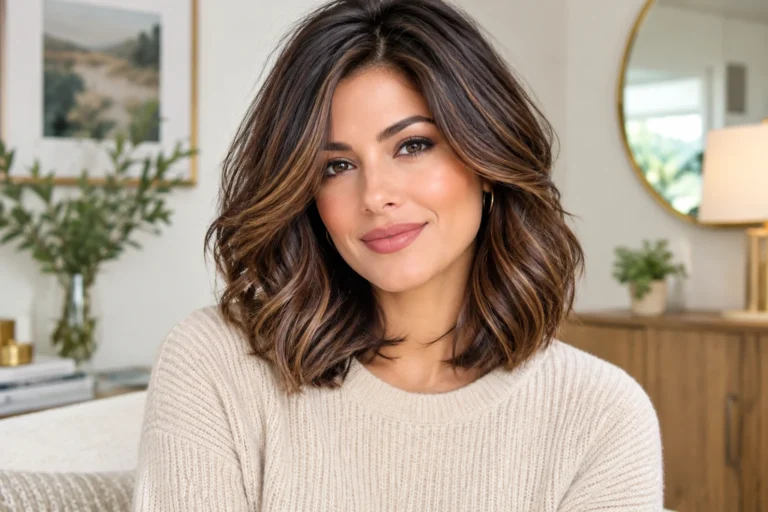
Office Hairstyles for Short Hair can be polished without looking overly formal or taking a long time to style. From sleek bobs and neat pixie cuts to soft waves, face-framing layers, and simple half-up looks, there are plenty of options for different hair textures and personal styles.
The key is choosing a shape that works with your natural hair and using a clean finishing technique. Below, you will find 22 wearable ideas with practical styling details, maintenance tips, and suggestions for different hair types, face shapes, and work situations.
1. Sleek Short Bob

A sleek short bob creates a clean silhouette with smooth ends that sit around the jawline or slightly above it. A precise center or subtle side part keeps the shape refined, while straightened lengths give the cut a crisp finish without looking severe.
Fine to medium hair benefits from this streamlined shape because there are fewer layers competing for visual fullness. For naturally wavy hair, smooth the surface with a round brush and finish with a lightweight anti-frizz product. It works particularly well for presentations, client meetings, and days when you want a neat appearance.
2. Classic Blunt Bob
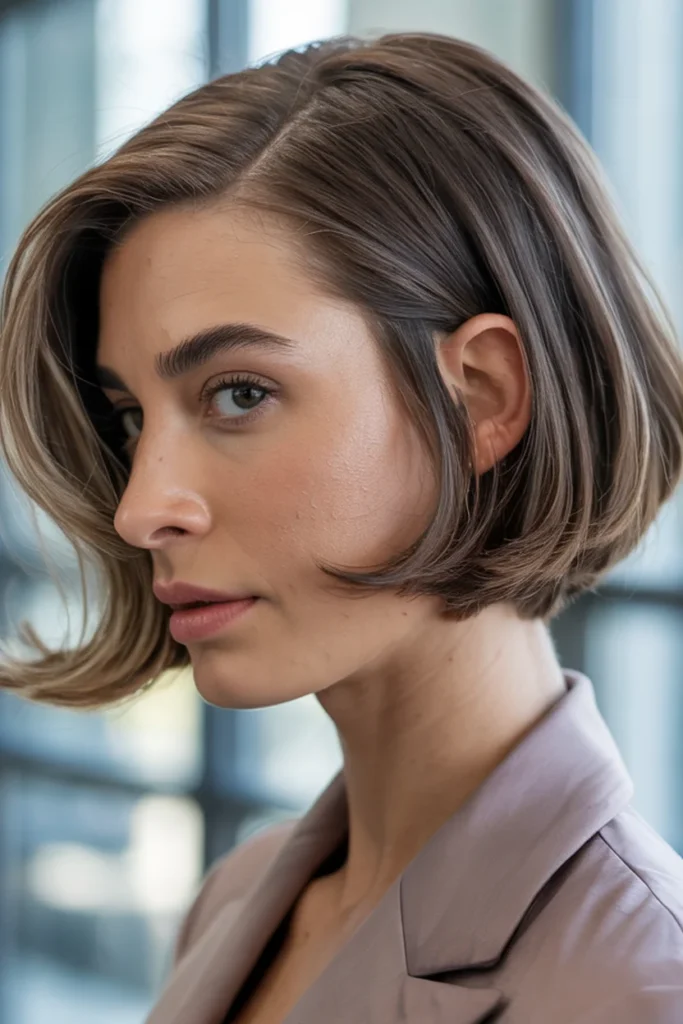
- Length: Keep the ends around the jaw or upper neck for a structured outline.
- Texture: Straight hair shows the blunt perimeter most clearly, while slight waves create a softer version.
- Parting: A center part gives a modern finish; a side part adds movement around the face.
- Maintenance: Regular trims help keep the bottom line sharp as the hair grows.
The strength of this cut is its simple shape. Rather than relying on heavy styling, the clean ends provide structure on their own. A small amount of smoothing cream through the mid-lengths can control flyaways without weighing down shorter hair.
3. Side-Parted Bob
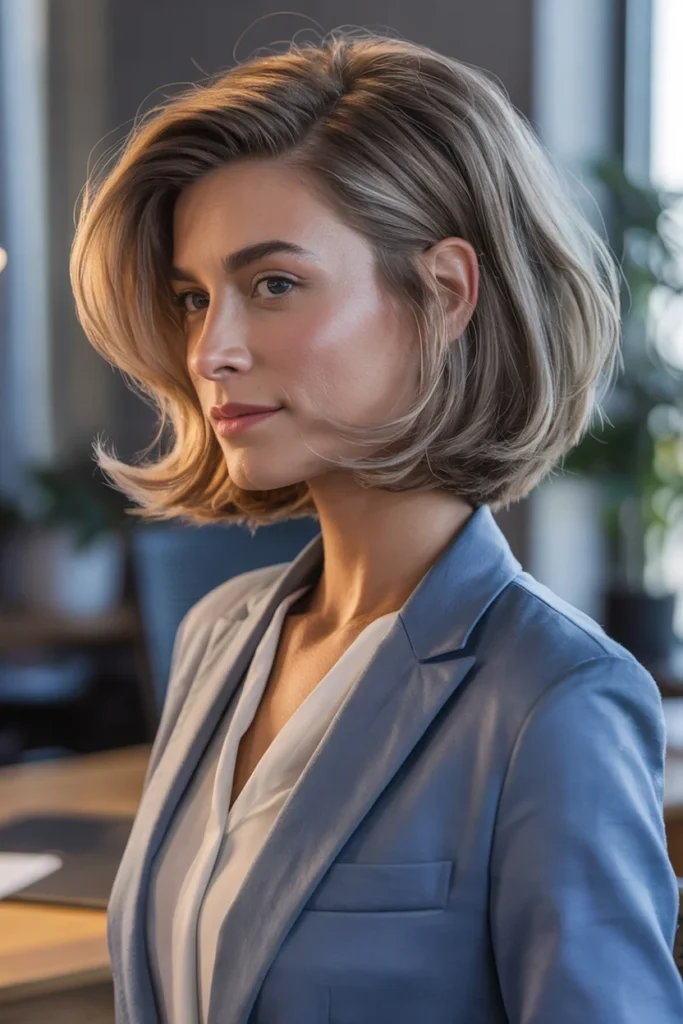
Quick Tip: Create the side part while the hair is damp so it dries into the desired direction. Blow-dry the roots upward and slightly back from the part to prevent the style from becoming flat.
The finished bob has more movement on one side and a gentle sweep across the forehead. This approach can soften angular features and add visual volume to fine hair. Keep the ends smooth and lightly curved under for a polished office finish that does not require much styling time.
4. Soft Layered Bob

BEFORE
Flat ends or a heavy one-length bob can sometimes make short hair look dense around the jaw. Fine hair may also appear limp when the cut has no variation in shape.
AFTER
Soft layers create movement through the sides while preserving enough weight at the ends to keep the haircut polished. The result has gentle volume rather than a heavily textured appearance.
Ask for subtle layers rather than aggressive thinning if your hair is fine. Blow-dry with a medium round brush, lifting the crown slightly and directing the ends inward. A lightweight volumizing spray can help the layers hold their shape.
5. Side-Swept Bob

- Start with towel-dried hair and apply a lightweight heat protectant.
- Create a deep or moderate side part while the hair is still damp.
- Blow-dry the front section across the forehead using a round brush.
- Smooth the remaining lengths and curve the ends slightly inward.
- Finish with a small amount of flexible-hold spray.
This style suits anyone who likes a softer alternative to a straight, center-parted bob. The sweeping front creates movement around the forehead and can be especially useful when you want bangs without committing to a full fringe.
6. Polished Pixie Cut

| Feature | Smooth Finish | Textured Finish |
| Texture | Flat and controlled | Lightly separated |
| Volume | Low to moderate | Moderate |
| Styling Time | 5 to 10 minutes | 5 to 8 minutes |
| Best Setting | Meetings and formal offices | Everyday workwear |
Both finishes can keep a pixie looking professional. A smooth version emphasizes the haircut’s clean outline, while small amounts of texture bring attention to the crown and top layers. Choose the finish based on your hair density and workplace style rather than treating one approach as universally suitable.
7. Side-Parted Pixie
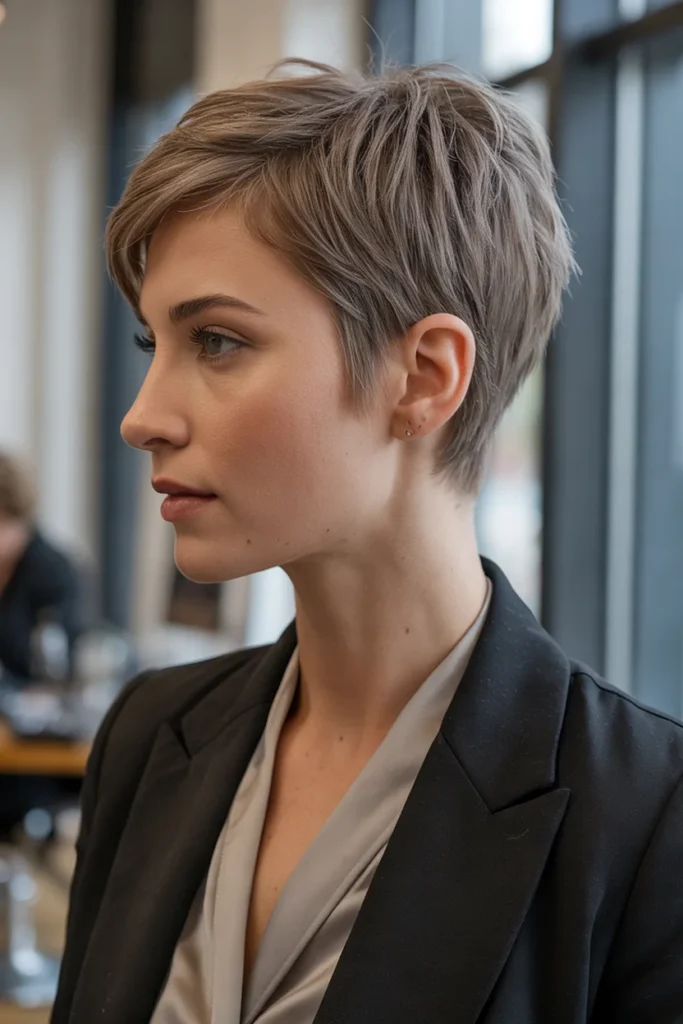
DO
- Keep the side part defined so the short layers have clear direction.
- Use a small amount of styling cream to control the top.
- Brush longer front pieces slightly across the forehead.
- Keep the neckline and sideburn areas neatly maintained.
DON’T
- Apply heavy wax throughout fine hair.
- Flatten the crown completely if you need more height.
- Over-texturize the ends until they look spiky.
- Ignore growing-out areas around the ears.
A side part gives a pixie a more deliberate shape and makes the haircut easy to adapt from casual workdays to formal meetings. The most polished result usually comes from controlled texture rather than excessive product or sharply separated pieces.
8. Textured Pixie Cut

- Hair Length: Short around the sides with slightly longer top layers.
- Texture: Works especially well with naturally wavy or slightly coarse hair.
- Styling Time: Usually around 5 to 10 minutes.
- Best For: Anyone who prefers movement instead of a completely smooth finish.
Work a pea-sized amount of lightweight styling paste between your fingertips before touching the hair. Concentrate the product on the longer top pieces and leave the sides relatively clean. This keeps the texture intentional while avoiding the stiff, overly styled appearance that can come from too much product.
9. Long-Bang Pixie
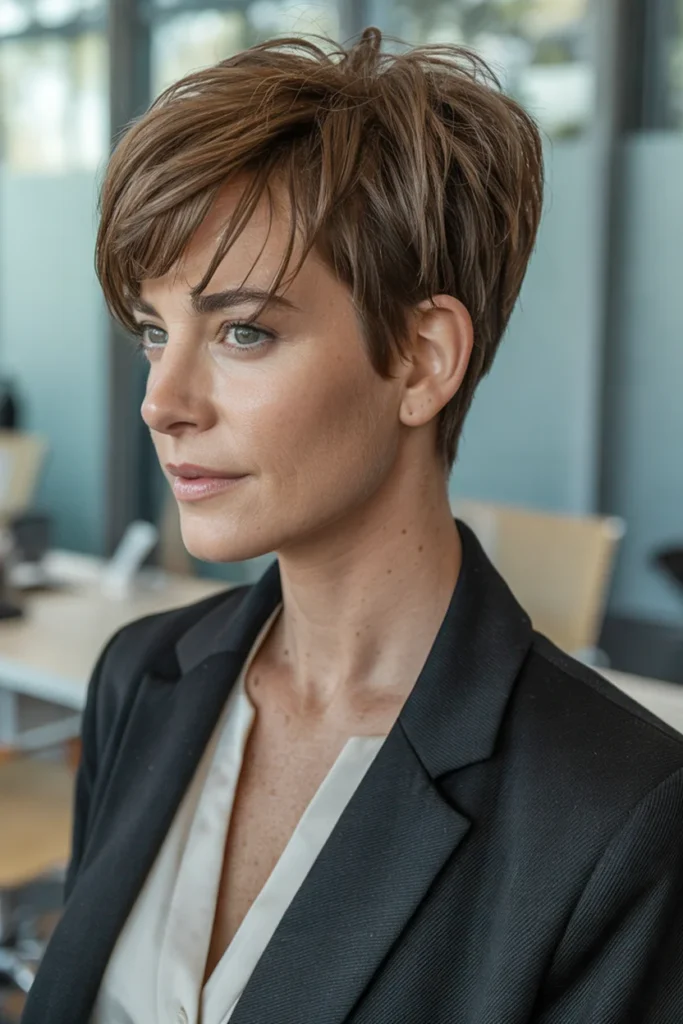
A pixie with longer bangs creates a useful contrast between closely cropped sides and a fuller front. The fringe can be brushed diagonally across the forehead, lifted slightly at the roots, or tucked toward one side for a cleaner finish.
The longer front section offers flexibility for different face shapes and gives fine hair an area where volume can be concentrated. Keep the fringe trimmed regularly so it does not fall into the eyes during work. A small round brush is enough to shape it in the morning.
10. Short Layered Volume

Short layered hair can look fuller when the layers are concentrated strategically rather than cut throughout the entire head. A little height at the crown combined with controlled movement around the sides creates a balanced office-ready shape.
For fine hair, apply volumizing mousse mainly near the roots and avoid heavy creams near the scalp. Blow-dry upward at the crown before smoothing the outer layer. Medium to thick hair may need selective weight removal so the layers do not become bulky.
11. Soft Short Waves

Quick Tip: Work with your natural bend instead of trying to make every section identical. Use a curling wand or flat iron to create a few loose bends, then let the hair cool before gently separating them with your fingers.
The result is relaxed but controlled, with soft movement around the face and ends. A light texture spray can provide hold without making the waves stiff. This look is particularly useful for workdays when you want more dimension than a straight finish.
12. Deep Side Part

BEFORE
Short hair with flat roots can lose its shape quickly, especially when the natural part sits close to the center. The front may also fall forward without enough direction.
AFTER
A deep side part creates an immediate change in the balance of the haircut. The heavier side can be smoothed close to the head while the opposite side gains a little lift and movement.
For a polished finish, create the part slightly off-center rather than forcing an extreme angle. Use a round brush at the roots and finish the lengths with a small amount of smoothing serum. This technique works especially well for straight or softly wavy hair.
13. Face-Framing Layers
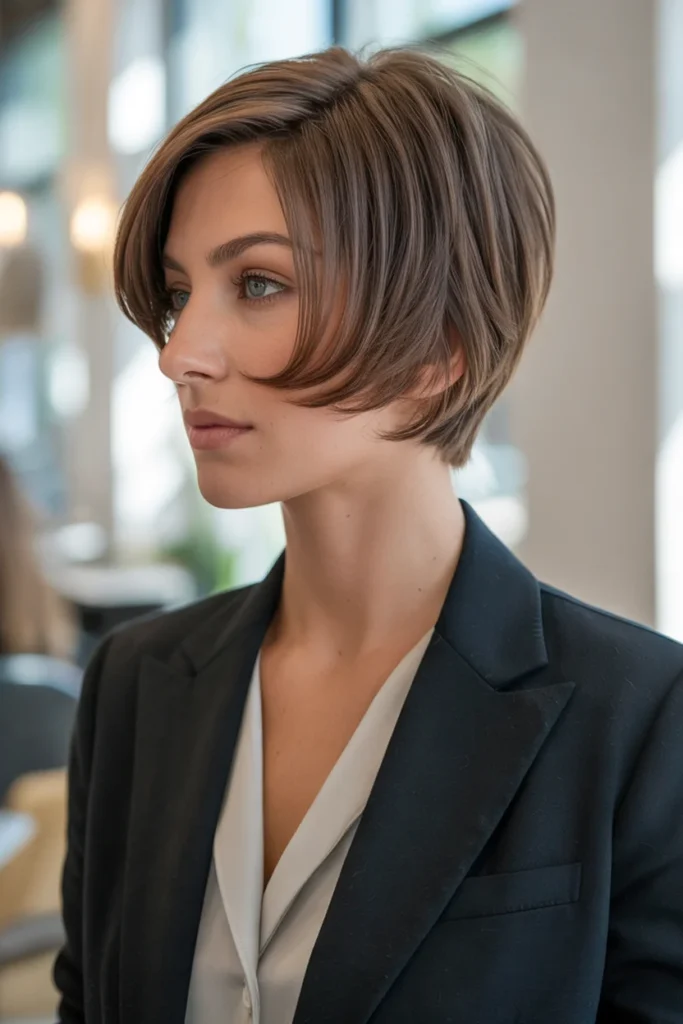
- Ask for shorter pieces around the cheekbones or jaw while keeping the overall length consistent with your haircut.
- Apply heat protectant before blow-drying.
- Direct the front layers away from the face with a round brush.
- Add a slight bend at the ends instead of creating tight curls.
- Finish with flexible hairspray if the layers need extra hold.
These layers can make a short cut feel softer around the face without sacrificing a professional outline. Adjusting where the shortest pieces begin can also change the visual effect, so discuss your preferred cheekbone, jawline, or chin placement with your stylist.
14. Chin-Length Soft Curls

| Feature | Loose Curls | Defined Curls |
| Shape | Relaxed and airy | More structured |
| Volume | Moderate | Higher |
| Finish | Soft | Defined |
| Styling Need | Light shaping | More curl control |
The two approaches create different impressions while keeping the same chin-length foundation. Loose curls can suit a softer everyday office look, while defined curls provide more visible shape for special work occasions. Use a curl cream suited to your texture and avoid brushing dry curls, which can create unnecessary frizz.
15. Blunt Straight Ends
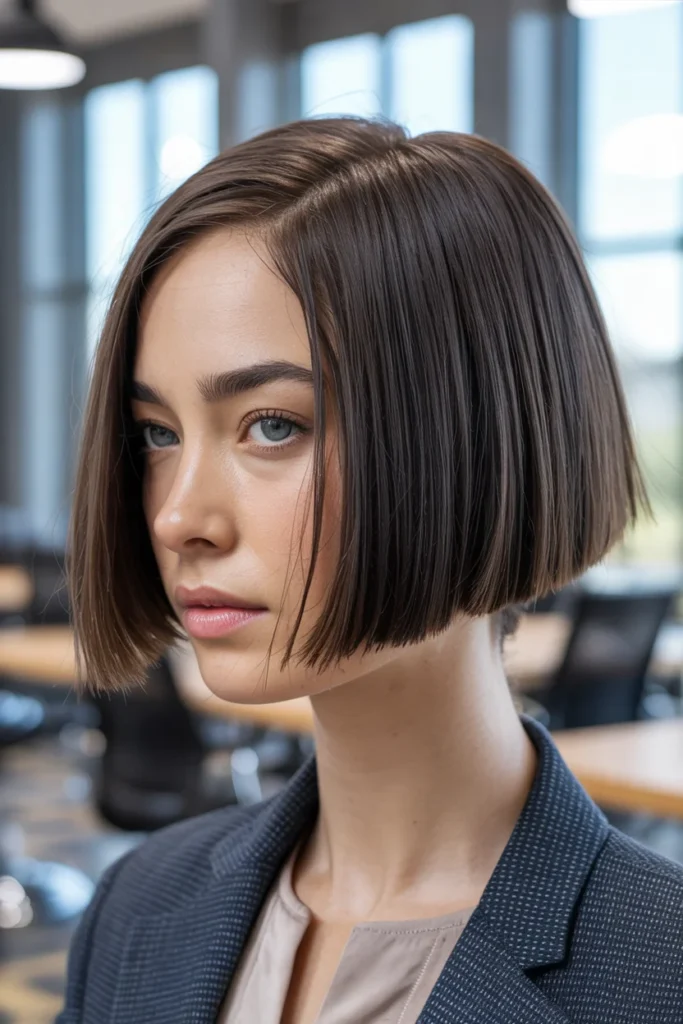
DO
- Keep the bottom perimeter clean and even.
- Use heat protection before straightening.
- Smooth only the sections that need extra control.
- Apply a tiny amount of serum to the ends.
DON’T
- Repeatedly pass a hot tool over the same section.
- Use heavy oil near fine roots.
- Thin the ends excessively if you want a fuller outline.
- Straighten damp hair with a hot iron.
Blunt ends make short straight hair look intentional with very little styling detail. The strongest visual element is the clean perimeter, so protecting the ends matters. If your hair is fine, keeping more density at the bottom can help the haircut appear thicker and more substantial.
16. Curtain Bangs

- Bang Shape: Shorter near the center and gradually longer toward the sides.
- Best Texture: Straight, wavy, and some loosely curly textures can all be adapted.
- Face Framing: The open center creates space around the forehead and cheekbones.
- Maintenance: Bangs need more frequent shaping than the rest of a short haircut.
Blow-dry each side away from the face using a small round brush, then allow the sections to cool before separating them. The goal is a soft opening rather than a stiff curtain. If your hair is very fine, keep the bangs light so they do not become flat or oily during the workday.
17. Low-Maintenance Short Shag
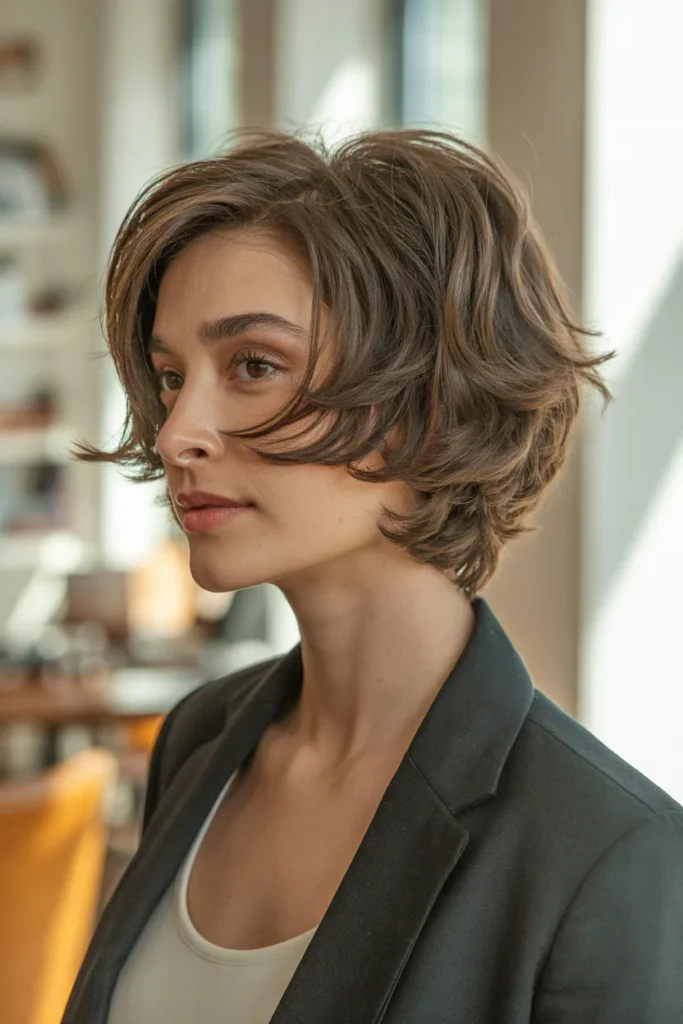
A short shag uses strategically placed layers to create movement around the crown and sides. Unlike a heavily polished bob, the shape can retain some natural texture, making it useful for people who do not want to spend a long time styling their hair before work.
For an office-friendly finish, keep the overall silhouette controlled and use a small amount of texture cream on the ends. Naturally wavy hair can often air-dry into the shape, while straighter hair may need a few bends from a styling tool.
18. Tucked-Behind-Ear Bob
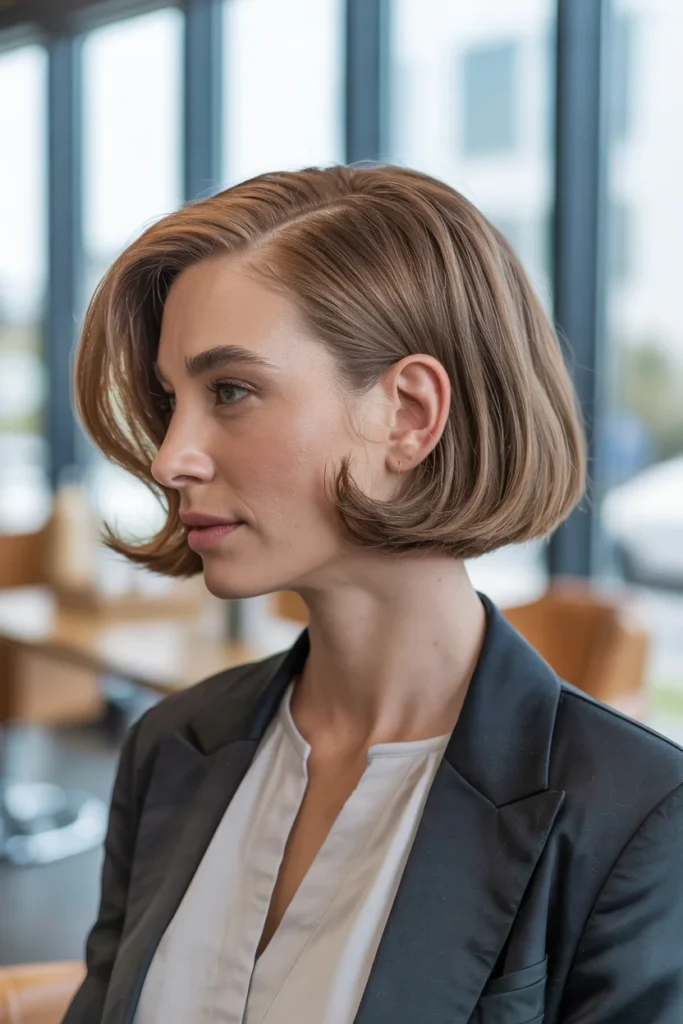
Quick Tip: Smooth the hair first, then tuck one or both sides behind the ears while the hair is still warm from blow-drying. A discreet pin can help hold slippery strands without making the accessory visible.
The tuck opens the face and gives a short bob a neat, organized appearance. It is especially useful for busy mornings because the hairstyle does not require complicated braiding or an updo. Leave a few fine pieces around the cheekbones if you want a softer finish.
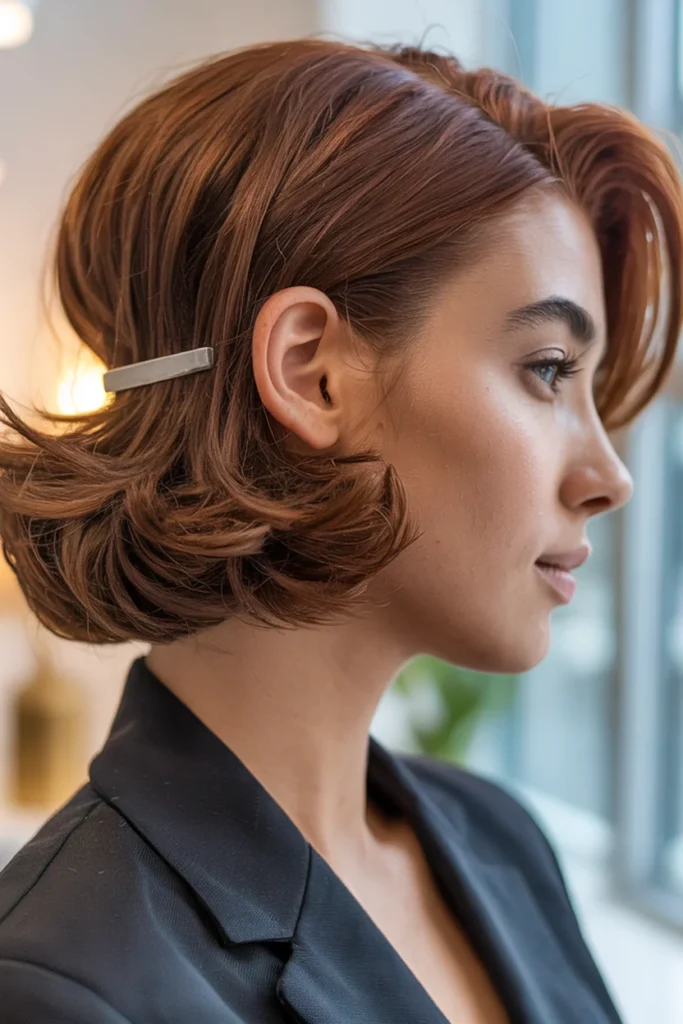
19. Polished Half-Up Style
BEFORE
Short hair can sometimes feel difficult to secure when the front and sides are too short for a conventional ponytail. Loose strands may fall forward during the day.
AFTER
Gathering the upper section into a small half-up shape keeps the front controlled while leaving the lower layers visible. The result works particularly well on chin-length or slightly longer bobs.
Use a small clear elastic or discreet clip and keep the crown smooth without pulling it excessively tight. For fine hair, gently loosen the secured section at the crown to create a little fullness without making the style messy.
20. Mini Low Ponytail
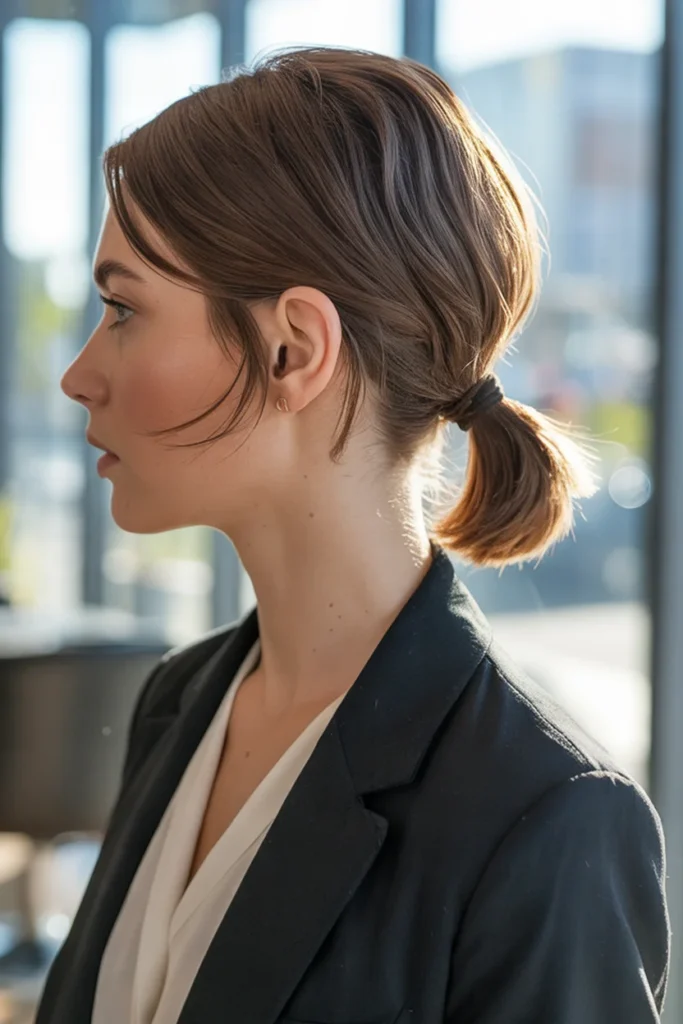
- Smooth the hair toward the nape using a small amount of lightweight styling cream.
- Leave enough length around the ears and nape to form a secure mini ponytail.
- Tie the hair with a small elastic that matches your hair color.
- Wrap a narrow strand around the elastic if your length allows.
- Finish the surface with a soft-hold spray to control flyaways.
This option works best when the haircut has enough length at the back to gather securely. It is practical for commuting, busy mornings, and meetings because the hair stays away from the face while retaining a simple, understated shape.
21. Sleek Headband Style

| Feature | Thin Headband | Wider Headband |
| Visual Effect | Subtle and refined | More noticeable |
| Best Hair Shape | Sleek bob or pixie | Bob with fuller volume |
| Root Effect | Minimal | Can add visual structure |
| Work Setting | Conservative offices | Creative or relaxed offices |
A headband can make a short haircut feel finished in seconds. Choose a simple design that complements your outfit and avoid placing it so tightly that it creates pressure around the hairline. Smoothing the front first helps the accessory look intentional rather than like a last-minute solution.
22. Soft Voluminous Finish

DO
- Lift the roots while blow-drying.
- Keep volume concentrated around the crown.
- Curve the ends slightly to maintain a refined outline.
- Use flexible hairspray instead of a heavy coating.
DON’T
- Tease the hair aggressively.
- Apply thick styling products directly to the scalp.
- Create excessive height that changes the haircut’s natural proportions.
- Use high heat repeatedly without protection.
Soft volume gives short hair a fuller appearance while preserving a professional silhouette. The trick is controlled lift rather than maximum height. This finish can work especially well for special meetings, interviews, presentations, or occasions when you want your everyday haircut to look a little more refined.
How to Choose the Right Short Office Hairstyle
The best choice depends on more than the haircut itself. Think about how your hair behaves naturally, how much time you have in the morning, and how formal your workplace tends to be.
- For fine hair: Blunt bobs, polished pixies, and carefully placed layers can help maintain visual density. Avoid excessive thinning.
- For thick hair: Layer placement and selective weight removal can prevent a short haircut from becoming too bulky.
- For naturally wavy hair: Soft waves, layered bobs, and short shags can work with the existing texture rather than requiring daily straightening.
- For straight hair: Blunt ends, sleek bobs, and side-parted cuts show the haircut’s structure clearly.
- For rounder faces: Side parts, vertical volume, and longer face-framing pieces can create a more elongated visual effect.
- For longer or angular faces: Soft waves, side volume, and fuller bangs can add width and balance.
- For busy mornings: Pixies, tucked bobs, headbands, and simple half-up styles require fewer steps.
- For formal workplaces: Smooth finishes, defined parts, controlled waves, and clean silhouettes generally create a more traditional appearance.
Tips for Keeping Short Hair Professional at Work
Short hair often looks polished because its shape is visible, so maintenance matters. A few simple habits can keep the haircut looking intentional throughout the week.
Keep trims consistent. Short cuts can lose their shape quickly as the neckline, bangs, and side sections grow. The exact trimming schedule depends on the haircut and how quickly your hair grows.
Use less product than you think. Short hair can become weighed down easily, especially fine hair. Start with a small amount and add more only where needed.
Protect hair from heat. Frequent blow-drying and straightening can contribute to dryness and breakage. Use heat protection and avoid unnecessarily high temperatures.
Control flyaways without flattening the hair. A lightweight serum, smoothing cream, or soft-hold spray can polish the surface without removing all natural volume.
Adapt your styling to the workday. A sleek finish may suit a formal presentation, while soft waves or natural texture can work well for a more relaxed office.
Consider humidity. Moisture in the air can encourage frizz or cause waves to expand. Anti-frizz products and flexible-hold styling products can help maintain the intended shape.
Frequently Asked Questions
What is the best short hairstyle for an office?
There is no single best cut for every workplace or hair type. Sleek bobs, blunt bobs, polished pixies, side-parted cuts, and controlled waves are all practical choices. The most suitable option is one that fits your natural texture, daily routine, workplace expectations, and preferred level of maintenance.
How can I make short hair look professional for work?
Start with a clean shape and a controlled finish. Smooth flyaways, define your part, keep bangs directed away from your eyes, and avoid excessive product. Even a textured or naturally wavy cut can look work-ready when the overall silhouette is intentional.
Are pixie cuts appropriate for the workplace?
Yes. A pixie can be styled in several professional ways, including a smooth finish, side part, controlled texture, or longer swept fringe. Keeping the neckline, sides, and front maintained helps the haircut retain a neat appearance as it grows.
What are the easiest short hairstyles for busy work mornings?
A sleek headband, tucked-behind-the-ear bob, polished pixie, side-parted cut, and simple half-up style can be relatively quick to manage. Choosing a haircut that works with your natural texture can also reduce the amount of daily styling required.
How can I style short hair for a business meeting?
Choose a clean part, smooth the surface, and keep the ends or layers controlled. A sleek bob, polished pixie, deep side part, or soft-volume finish can create a more formal appearance. Use lightweight products so the hair stays touchable rather than stiff.
Final Thoughts
Short hair can be practical for work without becoming repetitive. The 22 ideas above range from structured bobs and polished pixies to soft waves, subtle layers, half-up styles, and quick accessories. When choosing Office Hairstyles for Short Hair, consider your natural texture, hair density, face shape, morning routine, and workplace setting rather than copying a cut exactly.
Small details such as a clean part, controlled volume, smooth ends, or neatly styled bangs can change the overall finish. Save this guide to Pinterest for your next salon appointment or busy work morning, then adapt the style that best fits your hair and everyday routine.