27 Protective Hairstyles for Thin Hair That Add Instant Volume
Thin hair can look beautiful, soft, and effortlessly elegant, but finding styles that create fullness without putting too much stress on the strands can take some trial and error. The right protective hairstyle can help reduce daily manipulation while making your hair appear thicker and more dimensional.
From loose twists and braided crowns to relaxed buns and scarf-wrapped styles, these looks combine gentle styling with plenty of visual volume. Here are 27 protective hairstyles for thin hair that can help you create a fuller-looking finish without sacrificing comfort or style.
1. Loose Low Bun

A loose low bun is one of the easiest ways to make thin hair look polished while keeping the ends tucked away. Instead of pulling the hair tightly, gather it gently at the nape and allow a little softness around the crown. Loosening the bun slightly creates the illusion of more volume.
Add a few face-framing pieces if you like a relaxed finish. This style works especially well for everyday wear because it keeps manipulation low.
- Keep the bun comfortably loose.
- Use a soft scrunchie instead of a tight elastic.
- Avoid repeatedly tightening the same area.
2. Voluminous High Puff

A high puff instantly draws the eye upward and can make thinner hair appear fuller. The key is to create height without pulling the sides too tightly. Gently gather the hair at the crown and use a puff-friendly band to secure it.
For extra dimension, lightly fluff the hair rather than brushing it aggressively. A little texture can make the puff look larger and more natural.
- Place the puff toward the crown for height.
- Use gentle finger fluffing.
- Choose a soft band that does not pinch.
3. Loose Two-Strand Twists

Loose two-strand twists offer a simple protective option while giving thin hair a textured, fuller appearance. Twisting the hair into moderately sized sections adds visual dimension and keeps the ends contained.
Avoid making the twists extremely tight or tiny. Larger, relaxed twists usually create a softer silhouette and reduce excessive tension. You can wear them down, pin them into an updo, or style them into a low bun.
- Use a lightweight moisturizer before twisting.
- Keep the roots relaxed.
- Seal the ends gently.
4. Chunky Flat Twists

Chunky flat twists combine the neatness of a protective style with the appearance of added fullness. Because the twists sit close to the scalp, they create defined sections while leaving the overall style soft and dimensional.
Keep the sections moderately large and avoid pulling tightly around the hairline. You can finish the twists at the back or turn them into an elegant updo for a more finished look.
- Create larger sections for a fuller appearance.
- Keep tension low around the edges.
- Moisturize before styling.
5. Halo Braid

A halo braid wraps around the head and creates an instantly romantic shape. On thin hair, gently loosening the braid after securing it can make it look wider and more substantial.
This style also keeps the ends tucked away, making it useful when you want a protective look for a special occasion. A few soft pieces around the face can make the finish feel less structured.
- Pancake the braid gently for extra width.
- Secure it with discreet pins.
- Avoid pulling the hairline too tightly.
6. Loose Box Braids
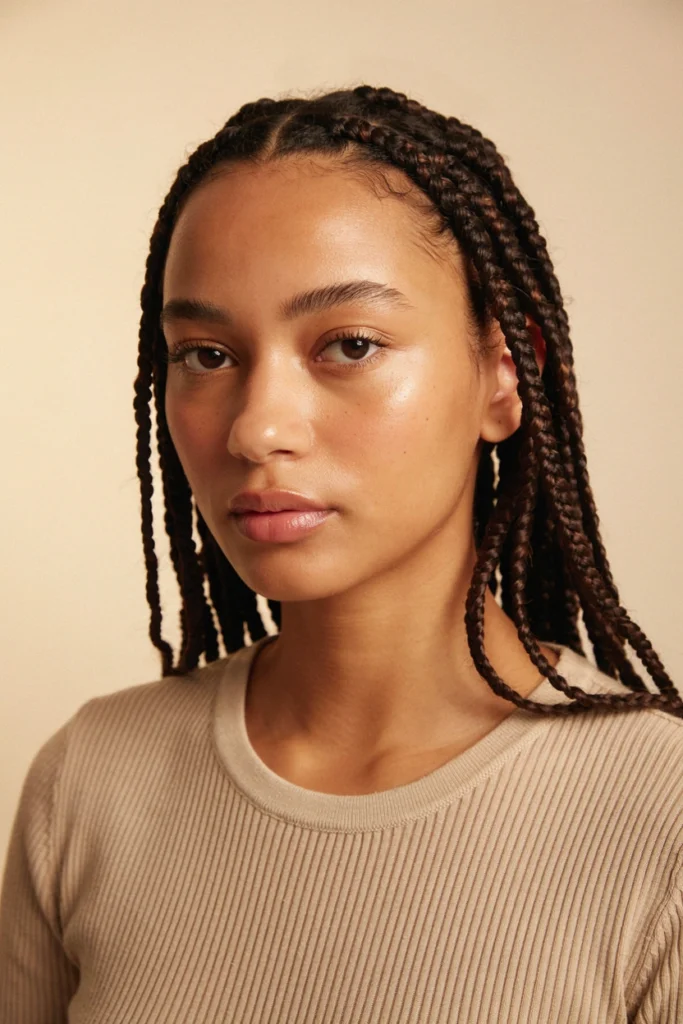
Loose box braids can provide weeks of styling flexibility when installed carefully. For thin hair, the most important factor is keeping the braid size and added weight appropriate for your strands.
Medium or larger sections can create a fuller-looking silhouette without requiring dozens of tiny parts. Keep the installation comfortable and avoid excessive tension, especially around delicate areas.
- Choose lightweight extensions if needed.
- Avoid very tight roots.
- Give your scalp regular breaks between installations.
7. Passion Twists

Passion twists bring plenty of texture and dimension to thin hair. Their soft, coiled appearance can make the overall hairstyle look much fuller than the natural hair underneath.
When choosing this style, consider lightweight extensions so the added hair does not create unnecessary strain. Keep the installation gentle and protect the twists at night with a satin scarf or bonnet.
- Choose lightweight hair.
- Keep the roots comfortable.
- Protect the style while sleeping.
8. Soft Crown Braid

A soft crown braid creates volume around the top and sides of the head while keeping the hair contained. Instead of creating a perfectly tight braid, gently loosen the sections to make the style appear broader.
This hairstyle works beautifully for casual days and dressier occasions. It also gives thin hair a graceful shape without requiring excessive teasing or backcombing.
- Loosen the braid carefully.
- Use pins that do not snag.
- Keep the crown soft rather than tightly pulled.
9. Low Twisted Chignon
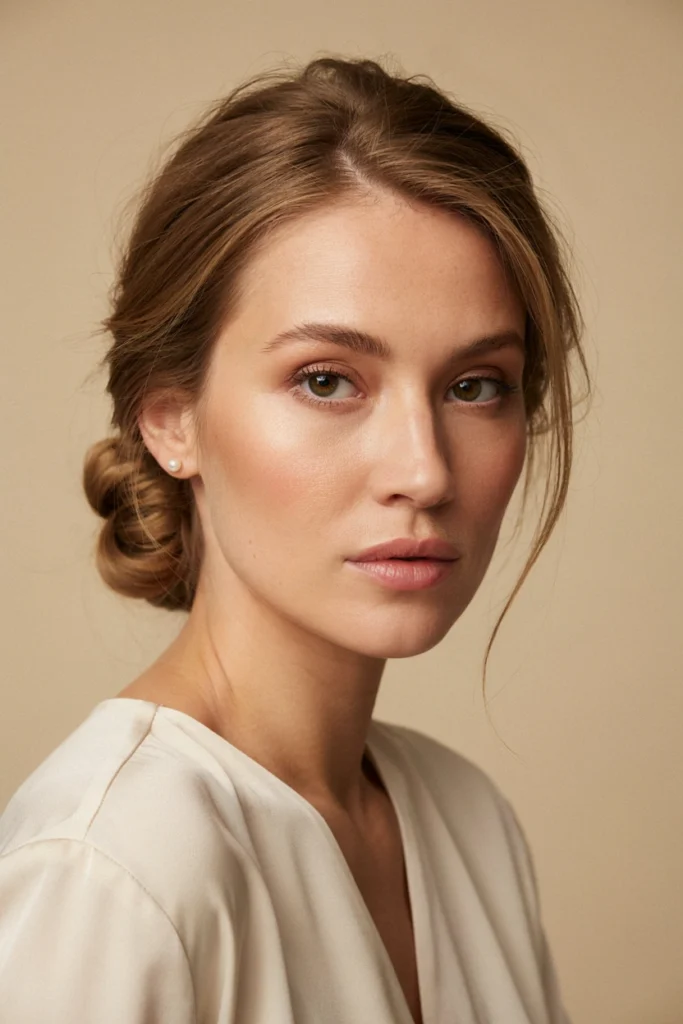
A low twisted chignon offers a sophisticated way to tuck away the ends. Twist two or more loose sections and wrap them into a chignon at the nape.
For thin hair, slightly loosen the finished chignon to create more body. You can also position the bun a little higher if you want the style to look more voluminous.
- Use a soft base to support the bun.
- Avoid twisting too tightly.
- Gently expand the finished shape with your fingers.
10. Loose French Braid
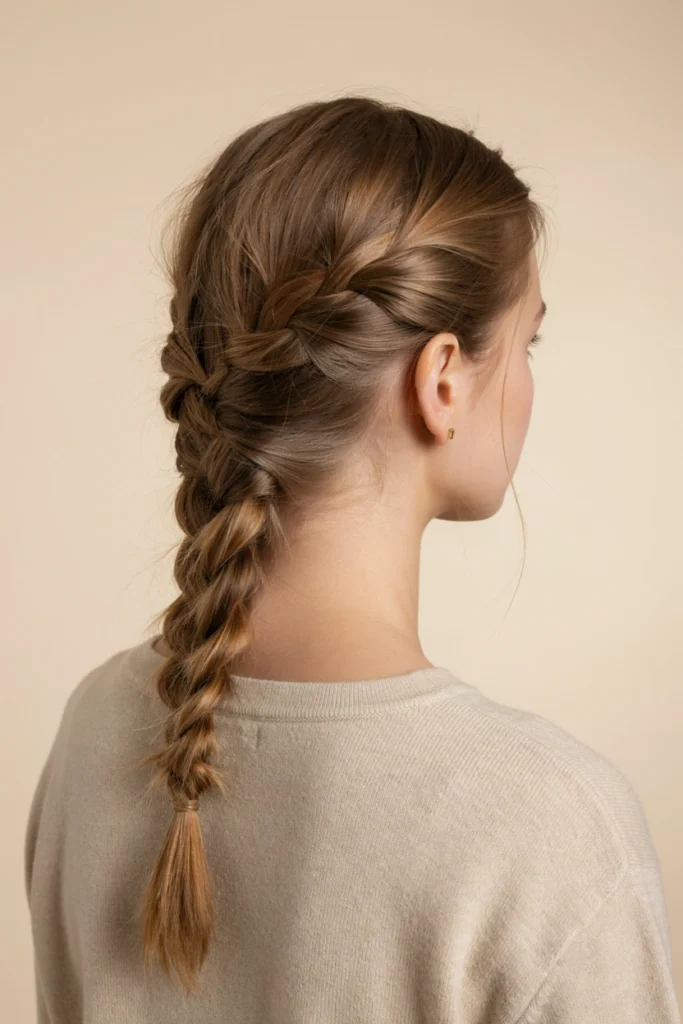
A loose French braid is a classic protective choice that can make thin hair appear more textured. Keeping the braid relaxed allows the sections to look wider and prevents the style from appearing too flat.
Start with gentle tension at the crown and gradually work toward the ends. Once secured, carefully loosen a few sections for a fuller finish.
- Braid with relaxed tension.
- Loosen the outer edges slightly.
- Secure the ends with a soft tie.
11. Side-Swept Braid

A side-swept braid adds visual volume by moving the hair toward one side instead of keeping everything centered. The asymmetrical shape can make the hairstyle appear fuller and more interesting.
Create a loose braid and gently widen it with your fingers. This look works particularly well when you want something simple that still feels polished.
- Sweep the braid over one shoulder.
- Loosen the braid for width.
- Keep the front comfortable and soft.
12. Jumbo Two-Strand Twists
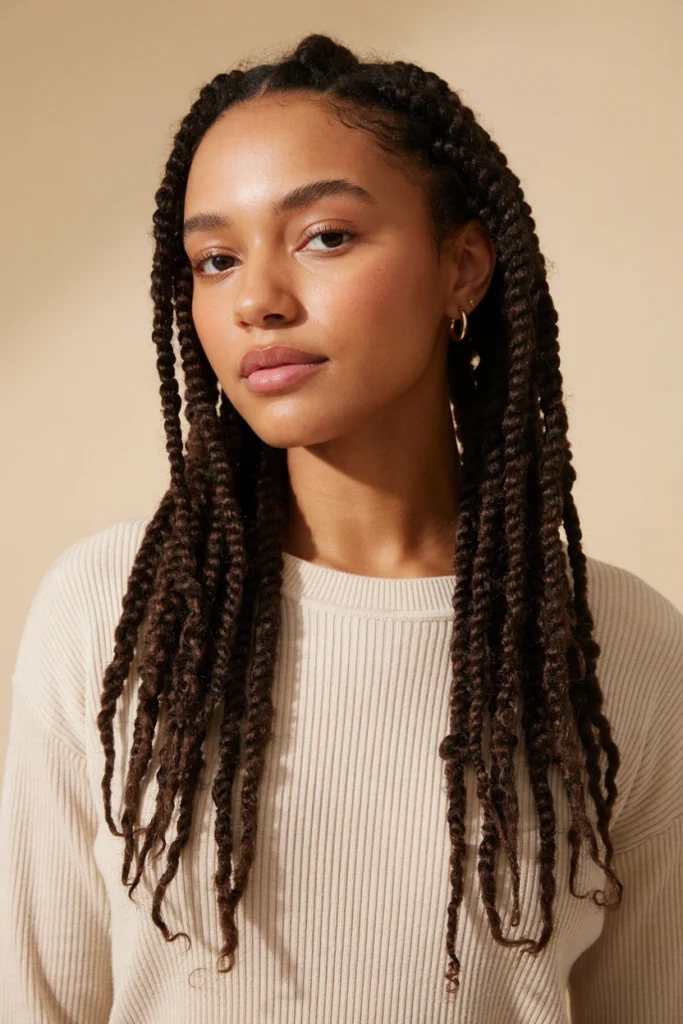
Jumbo two-strand twists are ideal when you want a protective hairstyle with fewer sections. Larger twists create a bold shape and can make thin hair look noticeably more substantial.
Keep the twists loose enough to avoid strain. You can wear them down for a relaxed look or gather them into a large bun for a more structured style.
- Work with larger sections.
- Avoid heavy products that flatten the twists.
- Protect the ends carefully.
13. Pineapple Updo

A pineapple updo is particularly useful for preserving texture overnight while creating a playful, lifted silhouette. Gather the hair loosely toward the top of the head without compressing it.
For thin hair, avoid pulling the pineapple too tightly. A soft scrunchie can hold the hair while allowing the roots and lengths to remain comfortable.
- Use a satin scrunchie.
- Keep the base loose.
- Sleep with satin protection when possible.
14. Loose Dutch Braid

A loose Dutch braid gives thin hair a raised, dimensional appearance because the braid sits outward from the head. Keeping the braid relaxed makes each section look larger.
After finishing the braid, gently pull apart the outer edges for additional width. Do this gradually so you do not disturb the structure.
- Start with relaxed sections.
- Gently widen the braid.
- Avoid tight pulling at the temples.
15. Claw-Clip Protective Updo

A claw-clip updo is a quick option for days when you want to reduce manipulation. Twist the hair upward and secure it with a properly sized claw clip.
Choose a clip that holds the hair without forcing you to wrap it repeatedly. This style can look especially full when you leave a little softness around the crown.
- Pick a lightweight clip.
- Avoid repeatedly twisting the hair.
- Keep the ends tucked inside.
16. Twisted Half-Up Style
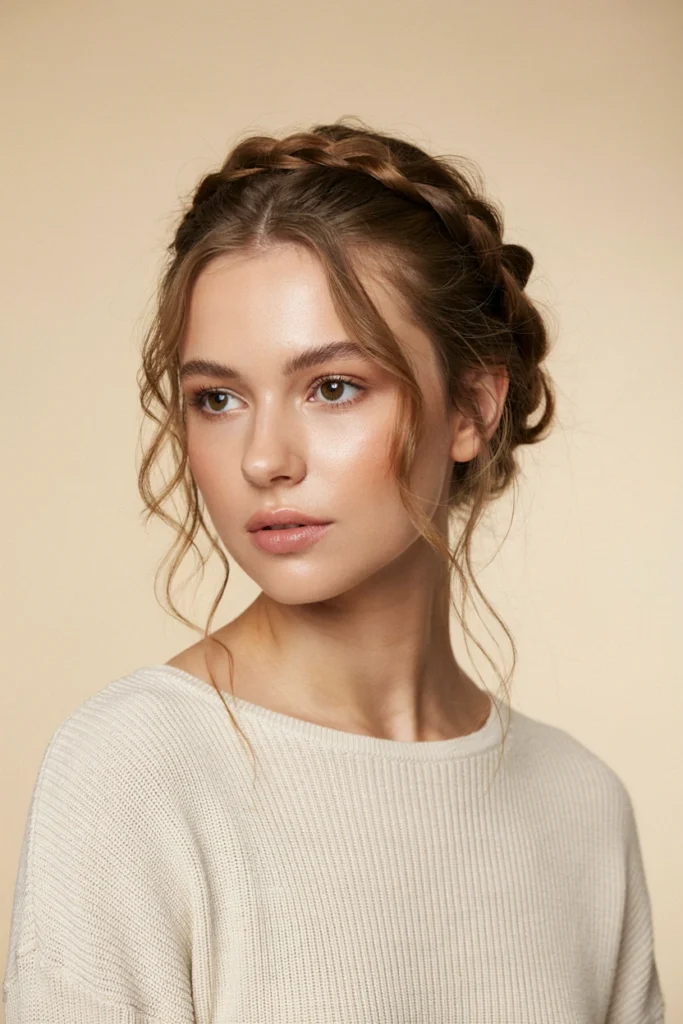
A twisted half-up style keeps some hair loose while securing the top and sides. The twists add texture and make the upper portion appear fuller without requiring a complicated technique.
This is a good option when you want a protective-inspired style without completely putting your hair away. Keep the twists loose and use gentle pins or a soft tie.
- Twist rather than tightly pulling.
- Add volume at the crown with your fingers.
- Avoid bulky or heavy accessories.
17. Loose Rope Braid

A loose rope braid creates a sleek but dimensional shape. Divide the hair into two sections, twist each section gently, then wrap them around each other.
Thin hair can look especially elegant in this style because the rope shape creates definition from root to tip. Keep the braid relaxed for a softer finish.
- Use two moderately sized sections.
- Keep the twists relaxed.
- Secure the ends gently.
18. Low Side Bun

A low side bun gives thin hair an elegant silhouette while keeping the ends protected. Position the bun slightly behind one ear or at the lower side of the neck for an asymmetrical finish.
Before securing it, gently loosen the crown and bun. This creates a softer shape and prevents the hairstyle from looking overly flat.
- Place the bun where it feels comfortable.
- Loosen the crown slightly.
- Use pins sparingly.
19. Flat Twist Updo

A flat twist updo combines scalp-friendly structure with a polished finish. Twist the sides or front toward the back, then gather the remaining hair into a loose bun or tucked style.
The directional twists create visual movement, which can make thin hair appear more dimensional. Keep the roots relaxed and avoid creating sharp tension.
- Make sections moderately sized.
- Keep the hairline gentle.
- Tuck the ends securely.
20. Scarf-Wrapped Bun
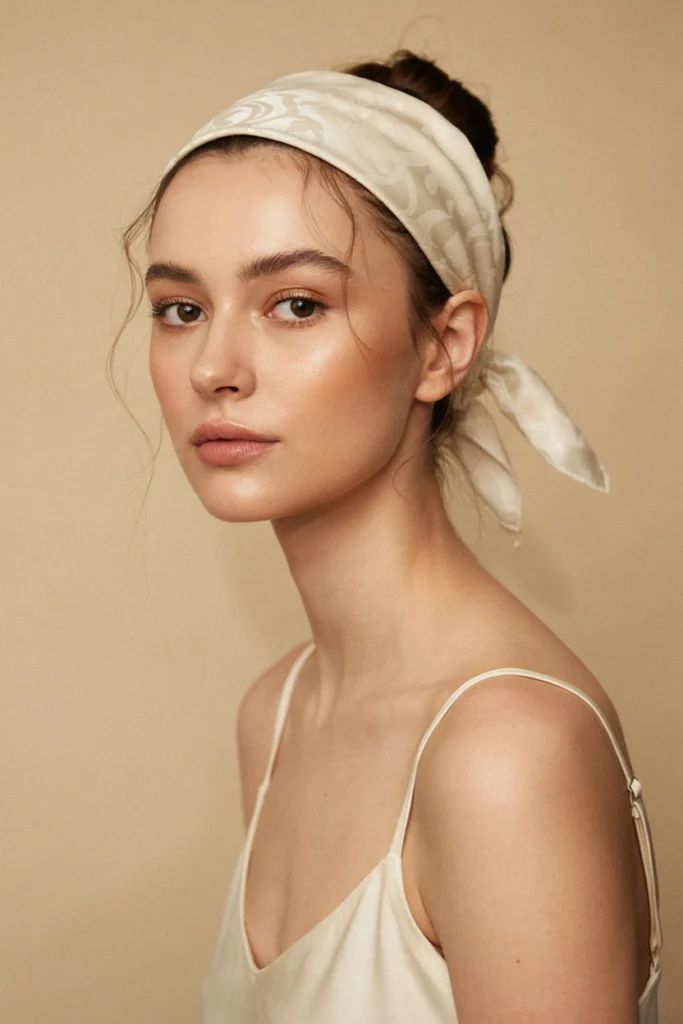
A scarf-wrapped bun is an easy way to add texture and visual interest to a simple protective style. Create a loose bun first, then wrap a lightweight scarf around its base.
The scarf can also help conceal a smaller bun while making the overall hairstyle look more substantial. Choose smooth fabric and avoid wrapping it tightly.
- Use satin or another smooth fabric.
- Keep the wrap comfortable.
- Match the scarf to your outfit for extra style.
21. Loose Cornrow-Inspired Style

A loose cornrow-inspired style can create the appearance of defined volume through directional sections. Instead of braiding extremely tightly against the scalp, use relaxed sections and leave the roots comfortable.
You can create a few larger rows toward the back and finish the ends in twists or a bun. This gives you the visual appeal of cornrows while keeping the overall look softer.
- Choose larger sections.
- Avoid tight edges.
- Keep the finish relaxed.
22. Braided Crown Updo

A braided crown updo combines the volume of a crown shape with the practicality of an updo. Create one or two loose braids and wrap them around the head before securing them.
For thin hair, gently loosen the braids to make them appear fuller. The finished style works well for weddings, dinners, celebrations, or everyday wear.
- Loosen the braid for extra width.
- Use lightweight pins.
- Keep the crown soft and natural.
23. Soft High Bun
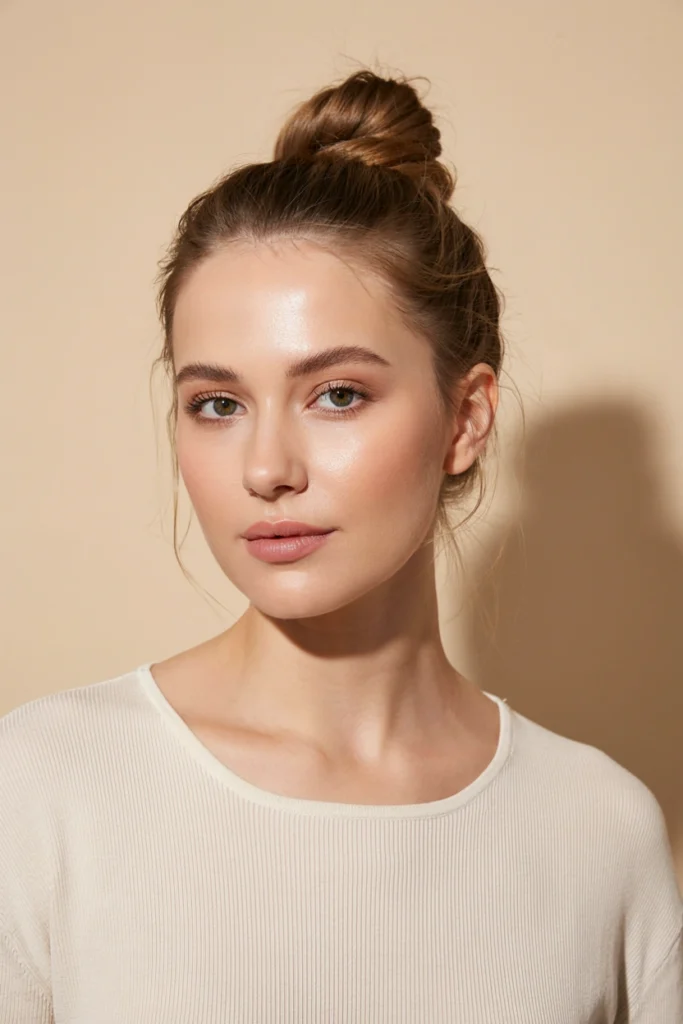
A soft high bun adds height, which can instantly make thin hair appear fuller. Gather the hair toward the crown and create a loose bun rather than a tightly slicked style.
A little texture around the bun can make it look larger. If your hair is very fine, a lightweight bun form can also add shape without requiring excessive teasing.
- Position the bun high on the crown.
- Keep the base comfortable.
- Use a lightweight filler if needed.
24. Mini Twist Updo
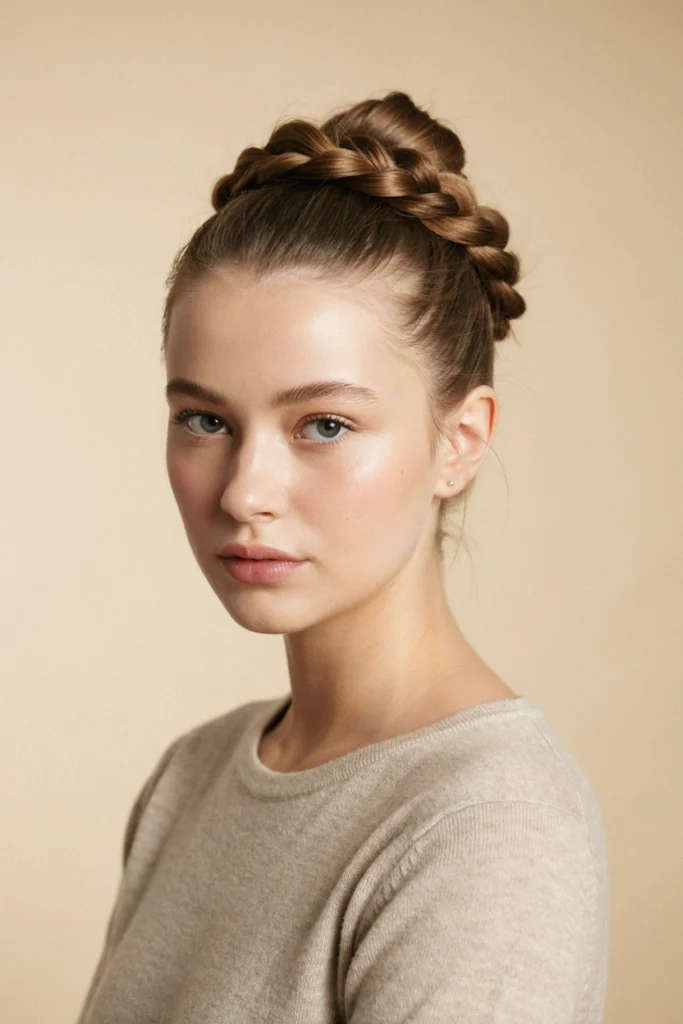
Mini twists can be transformed into a compact updo that keeps the ends tucked away. Gather the twists loosely and pin them upward, allowing some of their texture to remain visible.
Although the twists are smaller, avoid making them extremely tiny or tightly installed. A relaxed mini-twist updo can provide a neat look while reducing daily styling.
- Keep the twists lightweight.
- Avoid tight root tension.
- Moisturize the hair before installation.
25. Loose Fishtail Braid

A loose fishtail braid can make thin hair appear textured and layered. Its intricate pattern creates visual interest without requiring a complicated updo.
Keep the braid relaxed and gently widen the sections after securing it. This gives the fishtail a fuller appearance and makes the overall hairstyle feel soft rather than overly sleek.
- Use larger sections.
- Pull the braid outward gently.
- Secure the end with a soft elastic.
26. Side Twist Protective Style

A side twist is a simple option when you want your hair gathered without committing to a full updo. Sweep the hair toward one side, twist it gently, and secure the ends near the nape.
The diagonal direction adds movement and can make thin hair appear more dimensional. Keep the twist loose enough to remain comfortable throughout the day.
- Sweep the hair gently.
- Keep the twist relaxed.
- Tuck the ends neatly.
27. Satin-Wrapped Overnight Style

A satin-wrapped overnight style is less about creating a complicated daytime look and more about protecting your hair while you sleep. Place the hair into a loose bun, pineapple, or gentle twist before covering it with a satin scarf.
The smooth fabric can reduce friction compared with rougher materials. In the morning, release the hair gently and fluff it with your fingers for an easy volume boost.
- Use a smooth satin scarf or bonnet.
- Avoid tight overnight wrapping.
- Detangle gently the next morning.
How to Make Thin Hair Look Fuller With Protective Styles
The best way to create the appearance of fuller hair is to combine gentle styling with shape and texture. You do not need to tease your hair aggressively or use heavy products to make it look thicker.
Try these simple techniques:
- Choose loose braids and twists instead of tight styles.
- Create height at the crown when appropriate.
- Gently loosen braids to increase their visual width.
- Use lightweight accessories and hair additions.
- Keep heavy oils and creams away from the roots when they flatten your hair.
- Add texture through twists, braids, and soft updos.
- Use a satin scarf or bonnet at night to reduce friction.
- Avoid repeatedly brushing or restyling the same areas.
Remember that visual volume and actual hair density are different. A hairstyle can make your hair look fuller without physically increasing the number of strands.
Protective Styling Tips for Thin Hair
Thin hair usually benefits from a lighter approach to protective styling. A style that looks beautiful but creates constant tension can work against your goal of maintaining healthy-looking hair.
Keep these habits in mind:
- Avoid excessive tension: Your hairstyle should feel comfortable from the moment you install it.
- Be gentle with edges: The hair around your hairline can be especially vulnerable to repeated pulling.
- Keep extensions lightweight: Extra hair can add volume, but too much weight may create unnecessary stress.
- Moisturize without overloading: Use lightweight products that support softness without making the hair greasy or flat.
- Protect your hair at night: Satin or silk accessories can help reduce friction.
- Change your part occasionally: Repeated tension in exactly the same location can be uncomfortable.
- Do not leave styles in indefinitely: A protective hairstyle still needs maintenance and regular breaks.
- Remove styles gently: Never rush through detangling or pull apart knots aggressively.
How to Choose the Best Protective Hairstyle for Your Hair
Start by considering how fine your strands are, how much hair you have, and how your scalp feels during styling. A hairstyle that works perfectly for one person may feel too heavy or tight for someone else.
For very fine hair, loose buns, soft twists, claw-clip styles, and scarf-wrapped looks can be good starting points. If your hair has more density but fine strands, larger braids and twists may give you the volume you want while keeping the style manageable.
Consider these questions before choosing:
- Does the style create noticeable tension?
- Is the added hair lightweight?
- Can you comfortably sleep with the hairstyle?
- Does the style require frequent retightening?
- Can you remove it without excessive pulling?
- Does it protect the ends while maintaining a comfortable scalp?
The most useful protective style is one that keeps your hair contained while still feeling easy to wear.
Final Thoughts
Thin hair does not mean you have to settle for flat or boring hairstyles. The right combination of loose braids, chunky twists, soft buns, crown styles, and gentle updos can create the appearance of instant volume while helping you reduce everyday manipulation.
Focus on comfort first, then shape and volume. A relaxed hairstyle that protects your ends and lets your scalp feel comfortable will usually be a better choice than a dramatic style that pulls too tightly. Try different options from this list and pay attention to which techniques make your hair feel and look its best.
FAQs
Are protective hairstyles good for thin hair?
Yes, protective hairstyles can be helpful for thin hair when they reduce daily manipulation and keep the ends tucked away. The key is avoiding excessive tension, heavy extensions, and styles that feel uncomfortable. Loose buns, twists, gentle braids, and scarf-wrapped styles are often easier to manage than very tight installations.
What protective hairstyle makes thin hair look thicker?
Loose twists, high puffs, chunky flat twists, halo braids, soft high buns, and loose Dutch or French braids can make thin hair look fuller. Styles that add texture, height, or width tend to create the strongest visual volume without requiring aggressive teasing.
Which protective styles are best for fine hair?
Fine hair often responds well to lightweight and low-tension styles such as loose two-strand twists, soft buns, claw-clip updos, side twists, crown braids, and satin-wrapped styles. The best option depends on your hair’s density, length, texture, and tolerance for styling.
Can protective hairstyles help prevent breakage?
They can help reduce breakage when they limit daily brushing, tugging, heat styling, and repeated manipulation. However, protective styling does not automatically prevent breakage. Tight installation, heavy extensions, rough removal, or leaving a style in too long can create additional stress.
How often should thin hair be given a break from protective styles?
There is no single schedule that works for everyone. Pay attention to how your hair and scalp feel. If a style causes soreness, excessive shedding, tangling, or visible stress around the hairline, remove it and give your hair a break before installing another style.
Are braids safe for thin hair?
Braids can be safe for thin hair when they are lightweight and installed with gentle tension. Avoid extremely tight braids, heavy extensions, and styles that pull continuously on the hairline. Larger, relaxed braids are often easier on fine strands than very small, tightly installed braids.
How can I add volume without damaging thin hair?
Create volume through gentle techniques rather than aggressive teasing or constant heat. Loose braids, twists, high buns, soft puffs, and lightweight accessories can add visual fullness. You can also gently fluff the roots with your fingers and use satin protection at night to reduce friction.