26 Winter Hairstyles for Black Women That Look Gorgeous
Finding the right winter hairstyles for Black women means balancing gorgeous looks with healthy hair care during colder weather. Between chilly winds, dry indoor heating, and the extra time spent wearing hats and scarves, your hair may need a little more attention this season. The good news is that you can still enjoy plenty of stylish options, whether you love long braids, defined natural curls, elegant updos, or chic short haircuts.
These 26 winter hairstyle ideas offer practical inspiration for everyday wear, work, holiday gatherings, and special occasions while helping you choose a look that suits your texture and lifestyle.
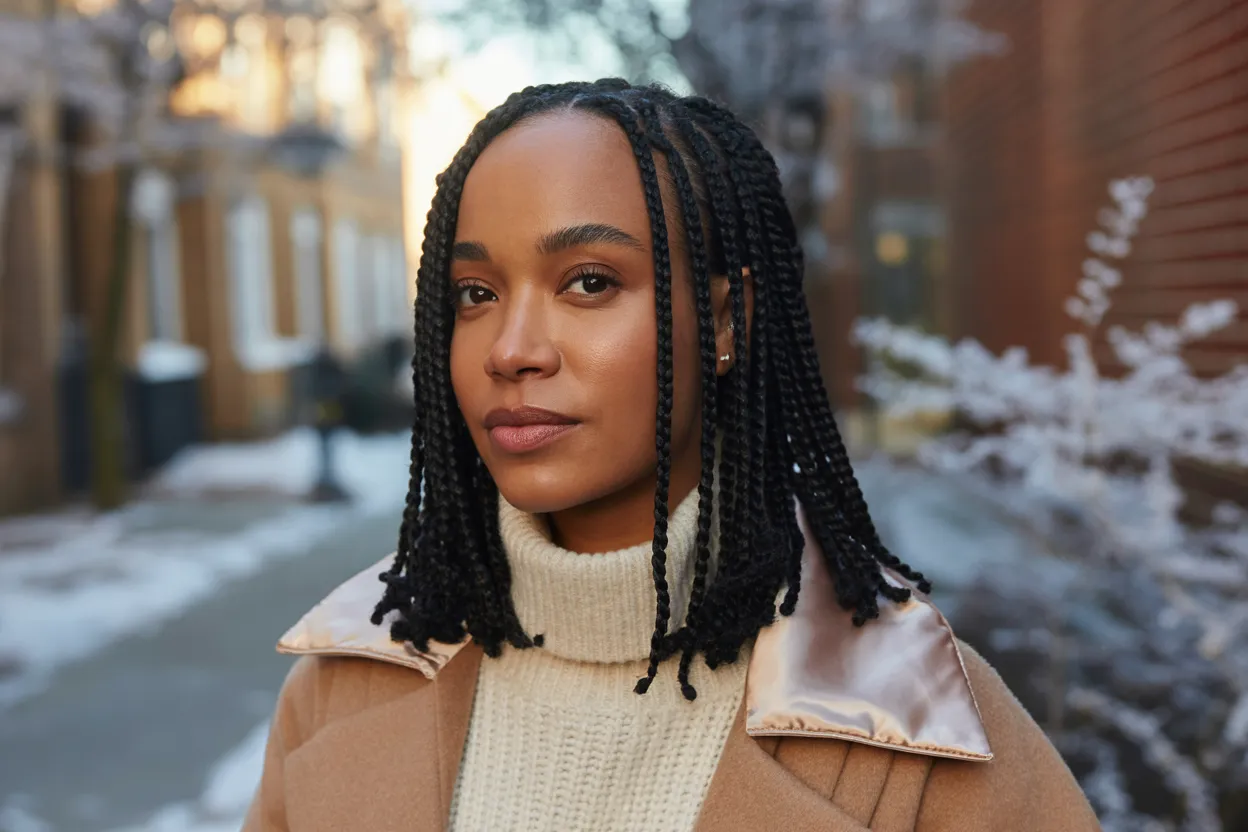
1. Knotless Box Braids
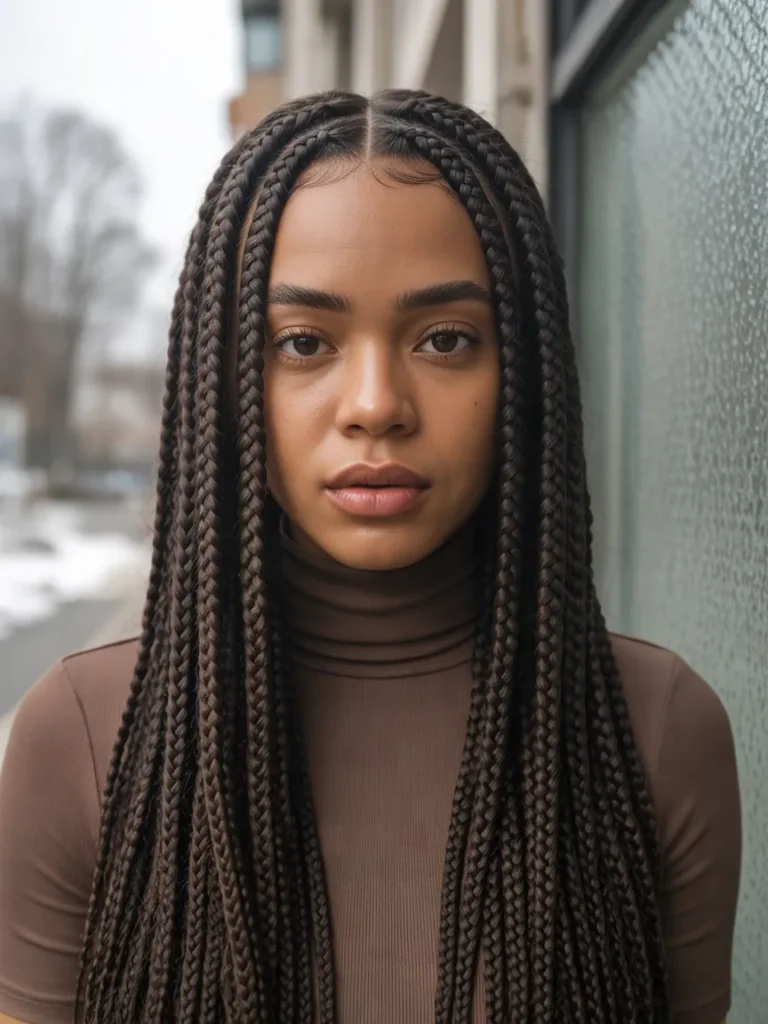
Knotless box braids have a smooth, natural-looking finish that makes them a favorite for women who want a polished protective style. The braids begin with your natural hair and gradually incorporate extensions, creating a flatter appearance at the roots. Wear them long and flowing, or gather them into a loose ponytail to show off their length. Dark brown, natural black, and subtle burgundy tones all complement winter outfits beautifully.
This style works with many hair lengths and personal aesthetics, although installation time depends on braid size and density. Ask your braider to avoid excessive tension, especially around your hairline. During winter, keep your scalp comfortable with a lightweight moisturizing product and protect the ends of your braids beneath a satin-lined hat or scarf.
2. Classic Jumbo Box Braids

- Braid size: Large, clearly defined sections create a bold appearance.
- Length: Shoulder-length jumbo braids feel manageable, while longer versions make a dramatic statement.
- Parting: Square or diamond-shaped parts add structure at the scalp.
- Styling options: Wear the braids loose, pull them into a high ponytail, or create a large bun.
- Maintenance: Keep your scalp clean and moisturized without coating the braids in heavy products.
Jumbo box braids are especially appealing when you want a statement hairstyle without spending as much time installing dozens of smaller braids. Their thickness pairs well with oversized sweaters, wool coats, and simple winter accessories. Since larger braids can feel heavy, choose a length and extension weight that remain comfortable throughout the day.
3. Shoulder-Length Knotless Braids

Quick Tip: Ask for braids that fall around your shoulders or collarbone rather than extending far down your back. This length is easier to tuck into a coat and less likely to become tangled against winter clothing. A middle part creates symmetry, while a side part gives the style a softer shape.
Shoulder-length knotless braids offer a practical balance between protective styling and everyday convenience. The ends can be left straight, curled slightly, or finished with subtle waves for extra movement. This length suits busy routines, office outfits, and casual weekends, especially if you prefer a hairstyle that stays away from bulky collars and scarves.
4. Boho Braids With Loose Curls

BEFORE
Traditional braids can create a uniform appearance, particularly when every strand follows the same pattern from root to tip. If you prefer a softer, more relaxed finish, tightly controlled braids may not give you the movement you want around your face.
AFTER
Boho braids combine neat braided sections with loose curly pieces woven throughout the style. The curls add dimension, movement, and a romantic finish that looks lovely with cozy knitwear and dressier winter outfits.
To maintain the look, refresh the loose curls with a suitable lightweight product and separate tangles gently with your fingers. Curly pieces may need more care than the braided sections, so protect them from friction and avoid brushing them aggressively.
5. Fulani Braids With Beads
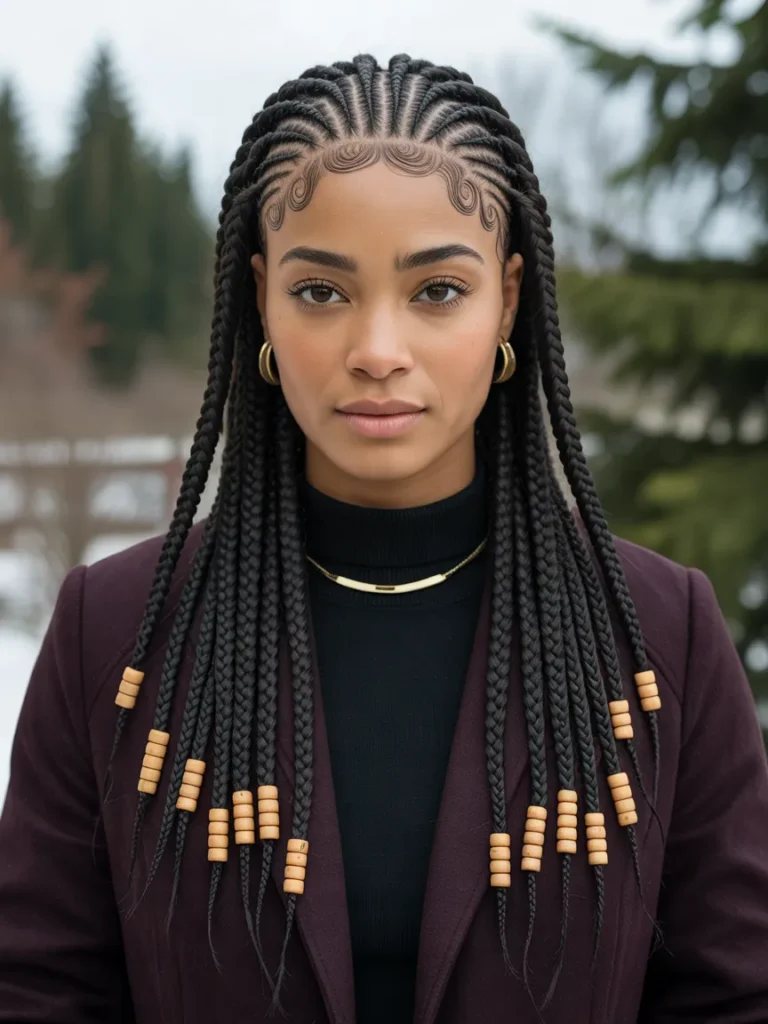
- Prepare the hair. Cleanse, condition, and detangle your hair before braiding. Stretching the hair gently can make sectioning easier.
- Create the pattern. Ask your braider for a central cornrow design with smaller braids directed toward the sides.
- Add the details. Place beads near the ends of selected braids for movement and a distinctive finish.
- Choose your length. Shoulder-length braids are convenient beneath coats, while longer versions create a more dramatic look.
- Finish carefully. Make sure the beads are secure but not so heavy that they pull on your natural hair.
Fulani braids bring together traditional cornrow patterns, individual braids, and decorative details. The combination looks especially striking with gold-toned beads, although wooden and neutral accessories offer a more understated finish. Keep the design comfortable around your temples, and choose accessories that will not catch on knitwear or scarves.
6. Cornrows With a Stylish Pattern

Cornrows can be simple and straight or shaped into intricate curves that create an artistic pattern across the scalp. A design with parallel rows feels clean and understated, while curved sections or a symmetrical geometric arrangement add visual interest without needing extensions.
| Style detail | Straight cornrows | Curved cornrows |
| Overall look | Clean and structured | Artistic and decorative |
| Parting | Parallel lines | Curves and angled sections |
| Styling options | Easy to pair with a ponytail | Best displayed as a full pattern |
| Maintenance focus | Scalp comfort and neat rows | Protecting the pattern as hair grows |
Both versions work well for active days, travel, and busy winter schedules. Ask for a pattern that suits your preferred maintenance routine, and avoid tight braiding that causes soreness or bumps. A satin-lined hat can also help reduce friction when you head outdoors.
7. Stitch Braids With a Sleek Finish

DO
- Choose clean, well-planned sections to highlight the stitch pattern.
- Use a small amount of suitable styling product to smooth loose hairs.
- Keep the hairline comfortable and avoid excessive tension.
- Protect the braids at night with a satin bonnet or scarf.
DON’T
- Pull the braids too tightly around the temples.
- Apply thick oils or gels until product builds up on the scalp.
- Scratch the scalp with sharp tools when it feels itchy.
- Leave the style in after it becomes uncomfortable or begins to damage your edges.
Stitch braids have crisp, visible parting lines that give the hairstyle a neat, sculpted appearance. They look particularly striking when braided straight back into a ponytail or finished at the nape. For winter, the key is preserving the clean pattern without repeatedly tightening the roots or using excessive product.
8. Goddess Braids

Hair Length: Medium to long, depending on the chosen design
Texture: Natural hair, with extensions if desired
Styling Time: Varies with braid size and pattern
Best Occasion: Workdays, family gatherings, celebrations, and everyday wear
Goddess braids feature larger, raised cornrows that create a bold, dimensional finish. Wear them in sweeping lines across the scalp or arrange them into a braided updo for a more formal appearance. Their sculptural shape pairs nicely with statement earrings and high-neck winter outfits.
For a comfortable finish, ask your braider to account for your natural density and hairline. Moisturize the scalp as needed, and use a satin covering when sleeping. The raised design is attractive on its own, so elaborate accessories are optional rather than necessary.
9. Senegalese Twist Hairstyles

Senegalese twists have a smooth, rope-like appearance created by twisting two strands together. Their consistent shape gives the hair a polished finish, whether you choose a medium length that rests on your shoulders or long twists that flow down your back. Black extensions look classic, while deep auburn or chocolate brown can add warmth.
The twists are versatile enough for everyday styling. Sweep them into a low ponytail for work, create a high bun for a dressier look, or leave them loose for a relaxed silhouette. Medium-sized twists are a practical choice if you want a balance between styling flexibility and installation time.
Keep the roots comfortable and avoid adding heavy products that make the twists feel greasy. Winter hats and scarves can cause friction, so tuck the hair gently and use a smooth lining to protect the style.
10. Passion Twists
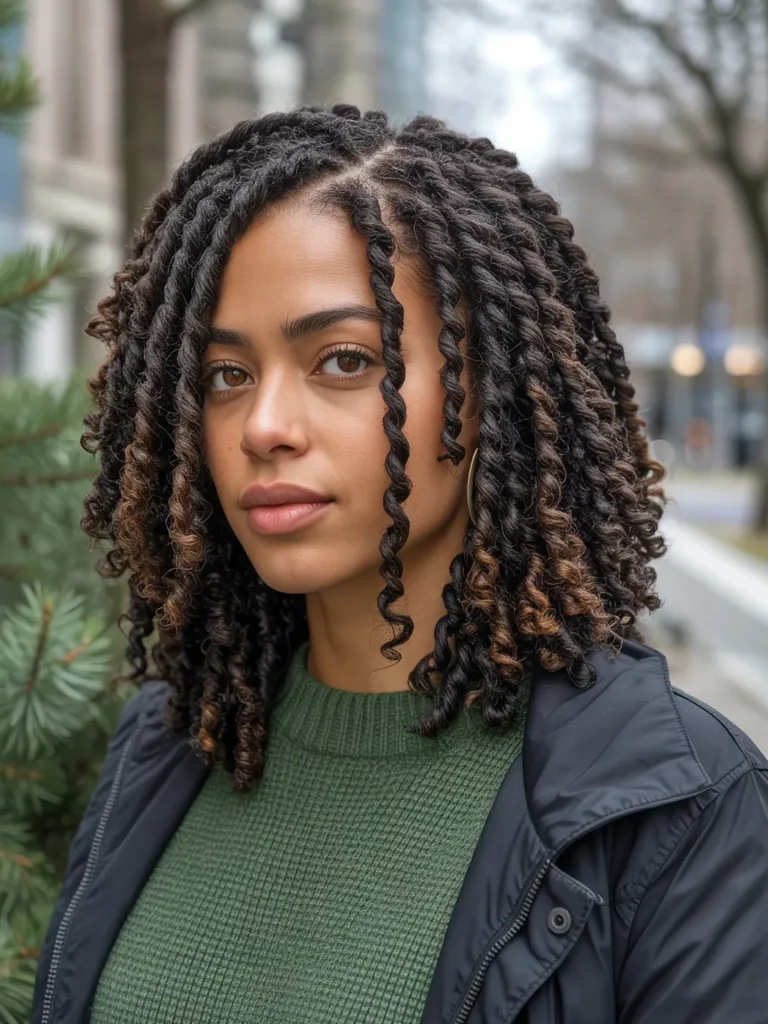
- Texture: Passion twists have a soft, slightly distressed surface rather than the smooth finish of rope twists.
- Length: A shoulder-grazing cut feels light and manageable, while longer twists offer more styling options.
- Color: Natural black, dark chocolate, and warm brown create wearable winter looks.
- Parting: A middle part looks balanced, while a side part adds a relaxed sweep.
- Care: Refresh dry-looking twists gently and protect them from rubbing against rough scarves.
Their slightly undone texture makes passion twists appealing if you prefer a softer, less uniform protective style. The ends can be left curly for extra movement, and the twists can be gathered loosely when you need your hair away from your face. Avoid excessive pulling when tying them up, especially near the roots.
11. Marley Twists

Quick Tip: Choose extensions with a texture that blends naturally with your hair, and separate each twist gently when styling. A light touch helps preserve the textured finish without making the hair look fuzzy or overly manipulated.
Marley twists have a fuller, more natural-looking texture that works beautifully for women who prefer volume over a glossy, uniform finish. Medium-length twists frame the face and create a rounded silhouette, while longer versions can be swept into a high bun or loose ponytail.
The style complements relaxed winter outfits and can also be dressed up with earrings or a simple headband. Keep the twists moisturized without soaking them in product, and pay attention to the roots so the added hair does not create uncomfortable weight.
12. Mini Two-Strand Twists

BEFORE
Natural hair can become harder to manage in winter when cold outdoor air and dry indoor heating leave the strands feeling rough. Loose curls may tangle against scarves and coat collars, especially when the ends are not protected.
AFTER
Mini two-strand twists divide the hair into small, defined sections that create a textured, flexible style. The twists can hang freely, be pinned into an updo, or be unraveled later for a twist-out with added volume.
Start with clean, conditioned hair and apply a product suited to your texture before twisting small sections. Let the hair dry fully to reduce unwanted frizz. The finished twists can be refreshed with a light mist and gentle smoothing, rather than frequent restyling.
13. Flat Twist Updo

- Moisturize and detangle. Begin with clean hair that has been conditioned and gently stretched if needed.
- Create your sections. Divide the hair into curved or diagonal parts according to the design you want.
- Twist close to the scalp. Work each section backward or upward, adding hair as you move along the part.
- Secure the ends. Tuck and pin the remaining hair into an updo, keeping the pins comfortable against the scalp.
- Set the finish. Smooth the edges lightly if desired and cover the style until it is fully set.
A flat twist updo creates a neat, sculpted shape without requiring heat or added extensions. The twists can follow a simple side-to-back pattern or meet at the crown for a more intricate look. This style suits formal dinners, winter celebrations, and days when you want your hair secured away from your collar.
14. Elegant Low Bun

A low bun offers two distinct finishes, depending on how you prepare the hair.
| Feature | Sleek low bun | Textured low bun |
| Surface | Smooth and polished | Soft with visible texture |
| Parting | Center or deep side part | Center, side, or loosely brushed back |
| Best hair base | Stretched, straightened, or smoothed hair | Natural curls, twists, or stretched hair |
| Overall mood | Formal and refined | Relaxed and romantic |
The sleek version pairs well with tailored coats and evening outfits, while a textured bun feels softer for everyday wear. Gather the hair at the nape and secure it without pulling excessively on your edges. A satin scrunchie and a few discreet pins can help hold the shape comfortably.
15. High Puff With Defined Curls

DO
- Start with moisturized curls that have enough slip to gather comfortably.
- Use a soft, adjustable band rather than a tight elastic.
- Shape the puff with your fingers or a wide-tooth comb.
- Apply a small amount of suitable curl product to help define the ends.
DON’T
- Pull the band tightly enough to cause scalp discomfort.
- Brush dry curls repeatedly in an attempt to smooth every strand.
- Use heavy gel if it leaves your hair stiff or flaky.
- Leave the same tight tension in place all day and night.
A high puff showcases natural curls by gathering them into a rounded shape above the crown. The height creates an attractive silhouette, while the visible coils bring texture and fullness to the look. Leave a few soft curls near the hairline if you prefer a less structured finish.
The style is especially convenient for casual outings and days when you want your hair off your neck. Refresh the puff by moisturizing the hair lightly and loosening the band when you are at home. Keeping the gathering point comfortable is more important than achieving perfectly smooth edges.
16. Natural Wash-and-Go Curls

Hair Texture: Naturally curly and coily hair
Best Feature: Visible curl pattern with natural movement
Styling Time: Depends on hair density and drying method
Main Products: Leave-in conditioner and a suitable curl-defining product
A wash-and-go lets your natural curl pattern take center stage, from compact coils to longer, springy curls. The final shape depends on your hair’s natural shrinkage, density, and curl definition. Some women prefer a rounded silhouette, while others shape the sides and crown for a more elongated finish.
Apply styling products to clean, wet hair in manageable sections, then encourage the curls to clump with your fingers. Allow the hair to dry fully before fluffing the roots. In cold weather, plan ahead so you do not go outside with wet hair, and use a satin-lined hat when extra protection is needed.
17. Twist-Out With Volume

A twist-out creates a fuller, more stretched appearance by unraveling two-strand twists after the hair has dried. The result can range from soft, elongated coils to a rounded style with plenty of volume. A side part adds asymmetry, while a center part creates a balanced shape around the face.
For definition, work with clean, conditioned hair and use a styling cream that provides enough hold for your texture. Smaller twists generally produce more definition, while larger sections create broader waves and volume. Let the twists dry completely before separating them, and use a little oil on your fingertips to reduce friction.
This look is lovely for everyday winter wear because it can be shaped around your preferred length and fullness. Protect the style at night with a satin bonnet, then refresh flattened roots by gently lifting them rather than combing through the ends.
18. Braid-Out With Soft Definition

- For more definition: Use smaller braids and unravel them carefully once completely dry.
- For extra length: Begin with gently stretched hair and braid in sections that are not too tight.
- For fuller roots: Change the parting slightly and lift the roots with your fingers after unraveling.
- For less frizz: Apply a suitable styling product before braiding and avoid repeatedly touching the hair while it sets.
- For nighttime care: Gather the hair loosely or cover it with satin to preserve the pattern.
A braid-out produces elongated waves and bends that look softer and less tightly coiled than many twist-outs. It is a useful option for women who want visible texture with a little extra length. The finished style works well with casual clothing and can be pinned to one side for a dressier appearance.
19. Tapered Natural Haircut

Quick Tip: Ask your stylist to shape the sides and nape gradually while preserving enough length on top for your preferred curl pattern. Bring reference photos that show both the front and side profile, since a tapered cut can look quite different depending on crown height and the amount of hair removed.
A tapered natural haircut combines shorter sides and a neatly shaped neckline with fuller curls at the crown. The contrast creates a defined silhouette without requiring long hair or extensive daily styling. You can wear the top rounded, slightly elongated, or shaped to emphasize your natural coils.
This cut is practical for women who prefer a shorter routine and enjoy showing off their facial features, earrings, or winter accessories. Keep the shape fresh with occasional trims, and use a moisturizing product that supports curl definition without weighing down the crown.
20. Short Afro With Defined Coils

BEFORE
A short natural style may lose its definition when the hair becomes dry or compressed beneath a hat. The crown can appear uneven, and the coils may look less distinct if the hair is handled too frequently.
AFTER
A well-shaped short afro brings the coils into a balanced silhouette, with a rounded outline and visible natural texture. Defining the hair in small sections can create a more consistent finish while keeping the overall shape soft rather than stiff.
Refresh the coils with a light mist or a suitable leave-in product, then use your fingers to arrange the shape. Avoid repeatedly combing through dry hair, which can disrupt definition. A satin-lined hat is useful when you want to keep the style protected outdoors without flattening the coils unnecessarily.
21. Curly Bob Hairstyle

- Define the part. Choose a middle part for a balanced outline or a side part for extra asymmetry.
- Prepare the curls. Apply a curl cream or another product that suits your texture.
- Shape the silhouette. Arrange the curls so they fall around the cheekbones, jaw, or chin, depending on the cut.
- Dry gently. Air-dry when practical or use a diffuser on a suitable low setting.
- Finish the roots. Lift the crown with your fingers once the hair is dry, keeping the ends defined.
A curly bob frames the face while retaining the movement and volume of natural curls. The length can sit at the chin or extend toward the shoulders, and subtle layers help prevent the outline from becoming too heavy. The cut works especially well for women who want a shorter style with visible texture.
Tell your stylist how your curls shrink as they dry, since the finished length may be shorter than the wet cut suggests. For winter styling, protect the curls from friction and refresh flattened sections rather than restyling the entire head.
22. Sleek Bob With a Side Part
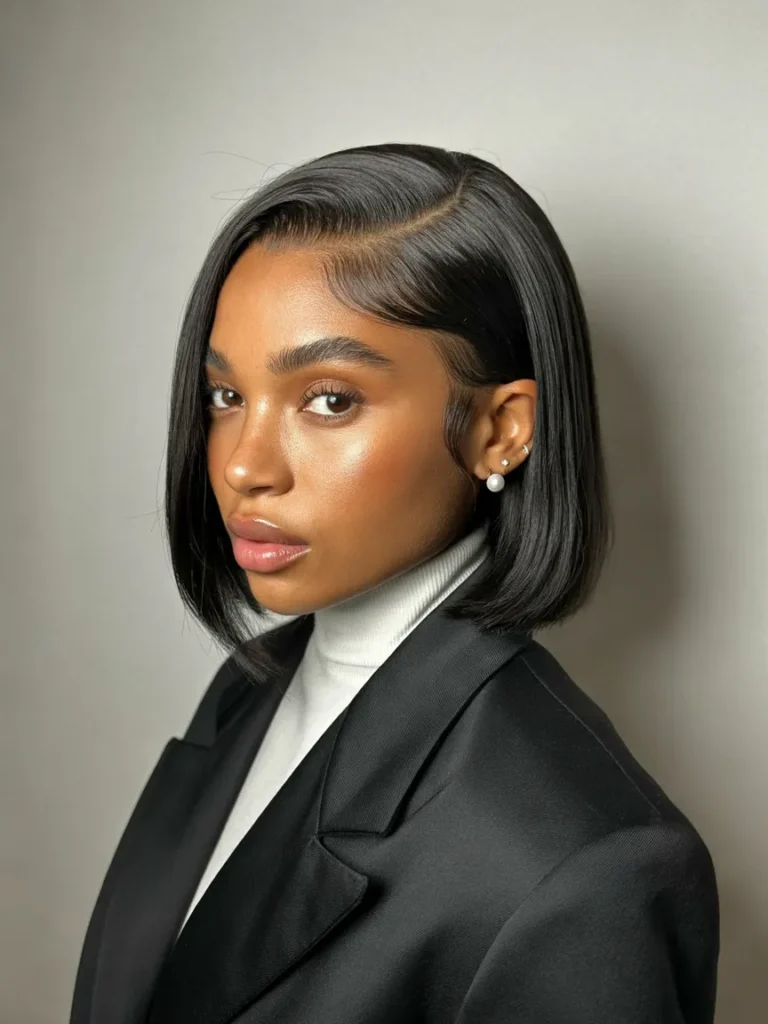
A sleek bob can be styled in two different directions, depending on the finish you prefer.
| Feature | Glassy straight bob | Soft curved bob |
| Ends | Straight and crisp | Gently curved inward |
| Parting | Deep side part | Side part with softer volume |
| Overall finish | Smooth and sharp | Polished with movement |
| Best occasion | Formal events and work | Everyday wear and dinners |
The deep side part gives a sleek bob an asymmetrical shape, with one side sweeping across the forehead and the other tucked behind the ear. This creates a strong outline without requiring complicated styling. A curved finish feels softer, while straight ends create a more graphic look.
Use heat protectant before applying hot tools, and keep the temperature appropriate for your hair. If your natural hair is tightly coiled, limit repeated heat styling and consider a professional silk press when you want a smooth result. Protect the bob from moisture and friction to help preserve its shape.
23. Shoulder-Length Silk Press
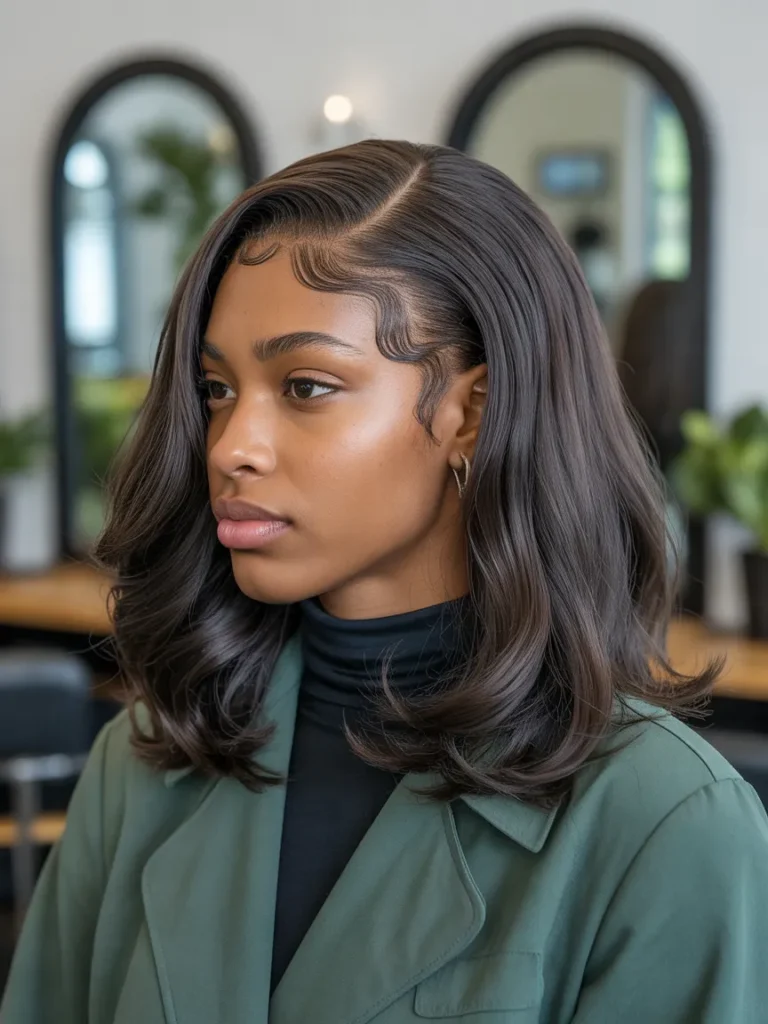
DO
- Start with clean hair and a thorough conditioning routine.
- Use heat protectant before blow-drying and flat-ironing.
- Work in manageable sections to avoid unnecessary repeat passes.
- Choose a trim that keeps the ends looking healthy and even.
DON’T
- Apply excessive heat in an attempt to make the hair stay straight longer.
- Use heavy oils that leave the hair limp or greasy.
- Forget that snow, rain, and humidity can cause natural hair to revert.
- Tie the hair tightly while it is still warm from styling.
A shoulder-length silk press gives natural hair a smooth, flowing finish while retaining movement at the ends. The length feels versatile because it can be worn straight, tucked behind the ears, or curled gently for more shape. A middle part looks clean and balanced, while a side part adds a little volume.
Winter conditions can make this style harder to maintain, especially when moisture causes the hair to revert. Keep a satin scarf handy, avoid unnecessary heat touch-ups, and consider a different style on particularly wet or humid days.
24. Half-Up, Half-Down Curly Hairstyle

Hair Length: Medium to long curls
Best Feature: Height at the crown with curls left loose
Styling Difficulty: Easy to moderate, depending on hair density
Accessories: Satin scrunchies, decorative pins, or a simple clip
The half-up, half-down style gives you the structure of an updo while leaving the rest of your curls visible. Gather the upper section at the crown for height, or secure it farther back for a softer shape. Leave a few curls around the face if you like a relaxed finish.
This hairstyle works well for dinner dates, holiday gatherings, family photos, and casual weekends. Use a gentle tie that will not snag your curls, and avoid pulling the gathered section too tightly. If your ends tend to dry out during winter, apply your usual moisturizing product before styling and protect the loose curls at night.
25. High Ponytail With Braided Extensions

A high ponytail with braided extensions creates a dramatic shape by combining a sleek base with long braids that fall from the crown. The height draws attention upward, while the length gives the style movement. Choose medium braids for a balanced look or thicker extensions for a bolder silhouette.
For everyday wear, keep the base neat and let the braids fall naturally over the back or one shoulder. The ponytail can also be wrapped around the base for a more finished appearance. Since added hair can create weight and tension, ask for a secure but comfortable installation and avoid wearing a heavy ponytail tightly for long periods.
This style pairs well with high-neck tops, fitted turtlenecks, and winter coats that leave room for the braids to move. A satin bonnet can help preserve the base while protecting the extensions overnight.
26. Chic Headwrap With Natural Hair
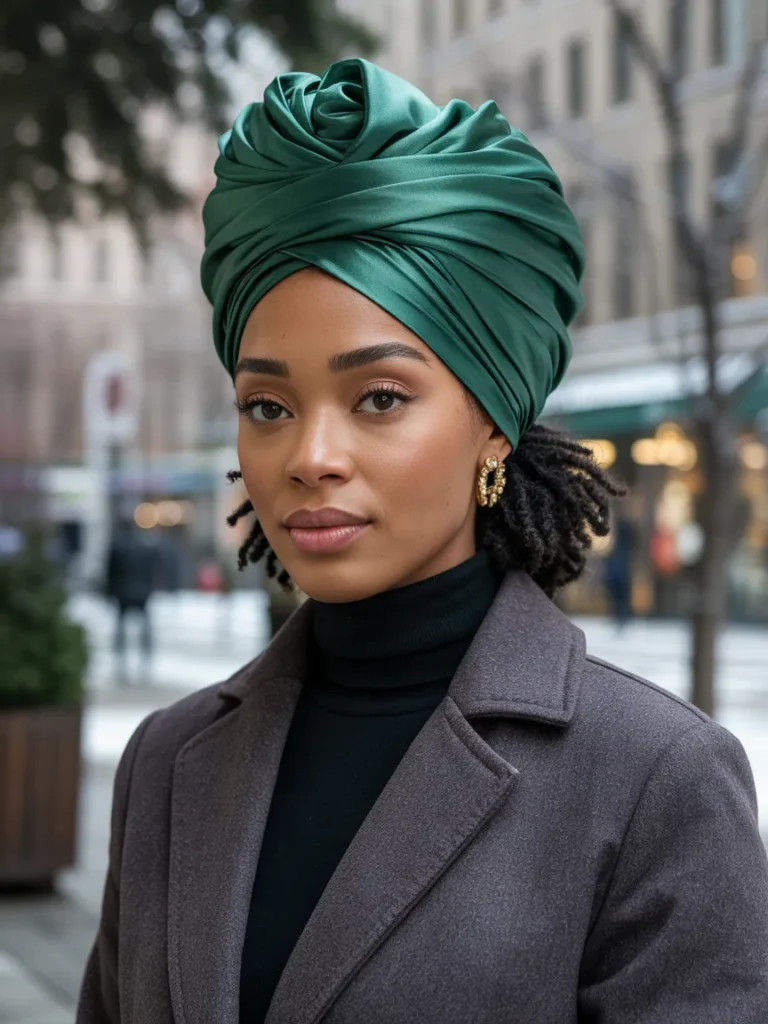
- Fabric: Choose satin or silk for a smooth feel against the hair, or use a soft fabric with a comfortable lining.
- Shape: A tall wrapped crown creates height, while a flatter wrap gives a more understated profile.
- Color: Burgundy, forest green, chocolate brown, and jewel tones complement many winter wardrobes.
- Hair underneath: Tuck in a twist-out, puff, braids, or another low-tension style that feels comfortable.
- Fit: Secure the wrap without pulling at the hairline or creating pressure around the temples.
A headwrap is a stylish way to protect your hair from cold air and reduce friction while adding color to a winter outfit. It can cover most of the hair or frame a few visible curls at the front, depending on how you wrap it.
For the best comfort, choose a size that stays secure without constant tightening. If your hair is gathered underneath, avoid creating a bulky knot that presses against your head. You can coordinate the wrap with your coat or use it as a statement accessory against a neutral outfit.
How to Protect Black Hair During Winter
Cold air, indoor heating, and friction from hats and scarves can leave textured hair feeling dry and prone to breakage. A few simple habits can help you maintain moisture and keep your chosen hairstyle looking fresh.
- Moisturize according to your hair’s needs. Use a leave-in conditioner or moisturizing product that suits your texture. Fine strands may need lightweight formulas, while thicker, tightly coiled hair may benefit from richer products.
- Protect your hair at night. A satin or silk bonnet, scarf, or pillowcase can reduce friction while you sleep. This is particularly helpful for preserving twists, braids, silk presses, and defined curls.
- Choose winter accessories carefully. Wool hats and rough scarf fabrics can catch on strands and cause friction. Satin-lined hats are a useful option, especially when you wear protective styles.
- Avoid excessive heat styling. Frequent flat-ironing and high heat can contribute to damage. Use heat protectant whenever you apply heat, and give your hair breaks between straight styles.
- Keep your scalp clean and comfortable. Braids and twists still need appropriate cleansing. Avoid allowing sweat, dirt, and styling products to accumulate, and do not ignore persistent itching or soreness.
- Protect your ends. Tuck your hair into a loose bun, braid, or other low-tension style when it repeatedly rubs against coat collars. Regularly check for dryness and tangling.
- Avoid tight protective styles. Braids, ponytails, and buns should not cause pain, bumps, or persistent tension around your hairline. A protective style should not come at the expense of scalp comfort.
Tips for Choosing the Best Winter Hairstyle
The right hairstyle depends on more than appearance. Consider your natural texture, available styling time, preferred length, and the kind of care you can realistically maintain.
For low-maintenance styling: Knotless braids, mini twists, flat twist updos, and cornrows can reduce daily manipulation when installed and maintained properly.
For natural hair lovers: Wash-and-go curls, twist-outs, braid-outs, and short afros let your texture remain the main feature. Choose a routine that provides enough moisture and definition without making your hair feel heavy.
For shorter hair: A tapered cut, curly bob, or sleek bob can provide a polished look without the weight of long extensions. Consider how your hair naturally falls before choosing a shape.
For special occasions: Goddess braids, a low bun, a half-up curly style, or a high braided ponytail can complement festive outfits, formal dinners, and winter celebrations.
For busy schedules: Consider how much time the hairstyle takes to install, refresh, and maintain. A style that fits your routine is more likely to remain comfortable and attractive throughout the season.
For face-framing effects: Side parts, curls around the cheekbones, and carefully placed volume can change the overall silhouette of a hairstyle. Ask your stylist to adjust the shape to your features and personal preferences.
Frequently Asked Questions
1. What are the best winter hairstyles for Black women?
Knotless braids, Senegalese twists, mini two-strand twists, flat twist updos, and natural afros are popular choices. Sleek bobs and curly styles also work well if you prefer a loose hairstyle. Your best option depends on your hair texture, styling routine, and how much maintenance you want.
2. Which protective hairstyles are best for winter?
Knotless box braids, cornrows, flat twists, and two-strand twists can help reduce daily manipulation. Choose a comfortable installation, keep your scalp clean, and protect your hair from friction. Remember that no hairstyle prevents all breakage, especially if it is too tight or left in longer than your hair can tolerate.
3. How can Black women prevent dry hair during winter?
Use a suitable moisturizing routine, protect your hair at night, and reduce friction from hats and scarves. Avoid excessive heat and harsh handling. The ideal product combination depends on your hair’s needs, so pay attention to how your strands respond rather than applying more product automatically.
4. Are braids a good choice for winter?
Yes, braids can be a practical winter option because they reduce the need for daily styling. Knotless braids, cornrows, and Fulani braids can all work well. Choose a comfortable length and weight, moisturize your scalp as needed, and protect the braids from rubbing against rough clothing.
5. How often should Black hair be moisturized in winter?
There is no single schedule that suits every hair type. Some hair benefits from a light daily refresh, while other textures need moisturizing less frequently. Check whether your hair feels dry, rough, or difficult to manage, and adjust your routine accordingly. Avoid overapplying products that cause buildup.
Conclusion
The best winter hairstyles for Black women combine personal style with practical care. From knotless braids and textured twists to defined curls, sleek bobs, and elegant updos, there are plenty of ways to enjoy a fresh look throughout the colder months. Consider your hair texture, preferred length, daily routine, and the amount of maintenance you can manage before choosing your next style.
Keep your scalp comfortable, protect your ends, and be mindful of heat and tension. Save this list on Pinterest so you can revisit your favorite ideas when planning your next salon appointment or creating a new winter look.